
Dental Sealant Procedure: What to Expect From It
Did you know that brushing cannot remove all the food particles from your teeth’s surface? Protecting your teeth against the development of bacteria is very important to prevent the creation of plaque and tar in your teeth. The food we eat daily is the main cause of the bacterial growth on our teeth.
While regular brushing, flossing, and rinsing can protect your teeth, it is a wise decision to go the extra length to further protect your precious teeth. Dental Sealant is an affordable and non-invasive treatment that helps to secure your teeth by creating a protective layer that prevents direct contact of food particles with your teeth.
According to Center for Disease Control and Prevention, dental sealants prevent 80% of cavities over 2 years in the back teeth, where 9 in 10 cavities occur and among adolescents aged 12 to 19, 48% have dental sealants on permanent teeth.
Benefits of Dental Sealants for Specific Age Groups
Dental sealants are an effective preventative measure that benefits people of all ages. While they are commonly associated with pediatric dentistry, sealants are valuable for adults as well.
Dental Sealants for Children
For children, whose permanent molars are still developing, dental sealants provide a layer of protection against cavities during crucial years. Kids often have difficulty reaching their molars while brushing, making these teeth more vulnerable to decay. Sealants effectively protect these hard-to-reach areas from early decay.
Dental Sealants for Teens and Young Aduts
Teens and young adults benefit greatly from dental sealants because they’re often more susceptible to sugary diets and might not always have perfect brushing habits. Dental sealants act like extra layer of protection for their teeth.
Dental Sealants for Adults
Adults who have deep grooves or pits in their molars—common spots for bacteria to accumulate—find that dental sealants make daily oral care easier and more effective.
Comparison of Dental Sealants vs. Fluoride Treatment
Many patients wonder if dental sealants are necessary when fluoride treatments are already in place. Although both treatments prevent cavities, they function quite differently.
Fluoride treatments help strengthen enamel, making teeth more resistant to decay overall, but they don’t prevent food particles and bacteria from getting trapped in the deep grooves and fissures of molars.
On the other hand, sealants create a physical barrier that blocks food particles from settling on the tooth surface, especially in areas where brushing may not be sufficient.
Think of it this way: fluoride is like a “vitamin” for your teeth, strengthening them from within, while sealants act as a shield to block outside threats. Together, they offer a powerful combination of dental protection.
Many dentists recommend using both treatments for comprehensive protection—fluoride as a regular part of oral hygiene and sealants for those specific at-risk areas.
What to Expect During Dental Sealant Appointment
So, let’s look at how affordable dental sealant procedure is performed in Houston.
Cleaning Your Teeth
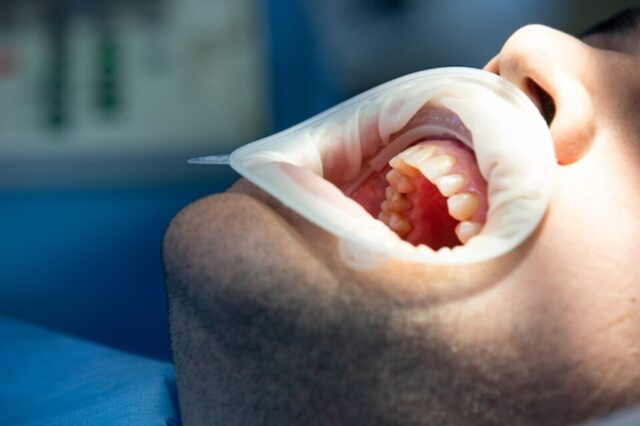
The first thing a dentist will do in the dental sealant procedure is clean your teeth thoroughly before applying the sealants. This is done to avoid trapping any food particles or bacteria between the sealant and tooth surface that can affect the treatment’s effectiveness. After your teeth are cleaned properly, the dentist will then dry out each tooth in your mouth.
To ensure that the teeth remain dry before the application of the sealant, cotton is placed around each tooth.
Application of the Acidic Solution
After your teeth are thoroughly cleaned, the dentist will move on to the next step where they will apply an acidic solution on the surface of your molars and premolars. This is done to ensure that the dental sealant is applied properly on the surface of your molars and premolars and the bond between the tooth’s enamel and sealant.
Improper application of the dental sealant will cause discomfort in your bites which should be avoided at all costs. You don’t have to worry about your teeth’ surface as the acidic solution used does not affect your teeth in any way. This ensures that your teeth look natural even after the procedure is completed.
Re-Rinsing and Drying of Teeth
Once the acidic solution is applied to the tooth, it is then once again rinsed off thoroughly and dried to ensure the tooth is adequately clean and ready for the dental sealant to be applied. This process is very quick and can be completed in mere minutes with the use of proper tools. After all the acidic solution is rinsed off, the dentist proceeds to the next step.
Painting the Sealant
Painting of the sealant over the tooth is only done once your teeth have been roughed up with the acidic solution. This dental sealant is a thin layer that is almost invisible but is dense enough to prevent direct contact of the tooth enamel with the food and retain good durability. The sealant is made from resins coated with specific materials that are meant to resemble your teeth.
Due to the sealant being applied only on the surface of your teeth, you don’t feel any discomfort or pain during the entire process. Over time, you will not even feel as if you have applied any dental sealant on your tooth’s surface.
Hardening of the Dental Sealant
Finally, to complete the process, the dental sealant is hardened to ensure that it is firmly applied on your tooth’s surface and remains durable against any possible damage. A curing light is used to harden the painted sealant. This curing light is a non-invasive tool and does not affect your teeth or mouth in any way.

Cost-Effectiveness and Insurance Coverage for Dental Sealants
Many patients may initially hesitate due to the upfront cost, but sealants are a highly cost-effective preventive measure compared to the expenses associated with treating cavities.
Treating tooth decay can involve more extensive procedures, such as fillings, crowns, or even root canals, all of which can be significantly more expensive and time-consuming.
Fortunately, dental sealants are considered a preventive service and are often covered by insurance, particularly for children and teens. For adults, insurance coverage varies, but many plans recognize the long-term value of preventive care and may provide partial coverage.
Even when paying out of pocket, the cost of sealants is relatively low. The investment can save hundreds, if not thousands, in future dental work.
Conclusion
While most dental illnesses are curable with proper treatment, it is much easier to simply prevent these diseases from developing in the first place. Regular brushing, flossing, and rinsing of a tooth are good practices that keep your teeth safe and clean, but there are corners of our mouth that we either forget to clean or cannot clean properly.
Sadly, even these small particles are enough to develop serious dental health issues. Issues like gum infection, tooth decay, and several others can form even in people who regularly practice good oral habits. So, opting for extra protection of teeth is never a bad decision.
Dental sealants are an excellent way to protect your teeth which also makes taking care of your teeth, easy, and most importantly, affordable. So, if you are a resident of Houston, and looking for affordable dental sealant treatment, contact All Stars Dental today.
Have a look at these amazing Google reviews left by their past and current patients which speak of their quality of service and expertise in handling all dental health issues and treatment procedures.