
Front Teeth Hurt? Causes, Relief and When to Get Care
You take a sip of cold water and feel a sudden electric jolt in one or more front teeth. Later, biting into food produces a sharp twinge, or you wake with soreness across the front of your smile. Because these teeth are visible and close to the lips, the discomfort can feel more alarming than pain in a back tooth.
Front teeth hurt for many different reasons, from exposed dentin and gum recession to a crack, irritated nerve, clenching, or pressure referred from the sinuses or jaw. The sensation alone can't identify the cause. What matters is the pattern, including what triggers it, how long it lasts, and whether swelling, fever, trauma, or spontaneous pain is present.
Tooth pain is common rather than unusual. A 2025 meta-analysis of 447,373 adults found an overall toothache prevalence of 24%, with regional estimates ranging from 43.2% in Africa to 13.44% in North America (2025 meta-analysis of tooth pain). This guide will help you observe the symptom safely, distinguish dental pain from sinus, jaw, and nerve-like sensations, and decide whether you need prompt care or a routine dental examination.
Table of Contents
- Why Your Front Teeth Hurt Right Now
- How Front Teeth Are Built to Feel Pain
- Common Dental Reasons Your Front Teeth Hurt
- When Front Tooth Pain Is Not Actually a Tooth Problem
- Safe Self Checks Before You Call the Dentist
- What to Do Next and When to Schedule an Exam at All Stars Dental
Why Your Front Teeth Hurt Right Now
A sudden front-tooth sensation often starts during an ordinary moment. You bite into a sandwich and one incisor hurts when pressure is released. You breathe in cold air while walking outside and feel a flash of pain. Or you wake up with several sore front teeth and a tight jaw, even though you don't remember injuring yourself.
The first question isn't just, “How bad is the pain?” Ask instead, what brings it on and what happens afterward. A brief response to cold that stops quickly has different implications from pain that lingers, begins without a trigger, or worsens with heat. Pain when biting points toward a different group of possibilities than pressure that changes with congestion or jaw movement.
A useful first distinction
Front-tooth pain may come from:
- The tooth itself, such as decay, a crack, pulp inflammation, or exposed dentin.
- The supporting tissues, including the gums and periodontal ligament around the root.
- The jaw muscles or joint, particularly when clenching or grinding changes the pain.
- Nearby structures, such as congested sinuses that refer pressure toward upper teeth.
- Nerve sensitivity, including temperature-triggered pain without an obvious cavity.
No home observation can replace an examination. It can, however, give your dentist a clearer starting point and help you recognize warning signs.
Practical rule: A symptom that is brief and stimulus-related may be less urgent than pain that lingers, throbs spontaneously, or appears with swelling. Both deserve attention if they persist.
The aim isn't to panic over every cold-sensitive tooth. It's to avoid dismissing a pattern that suggests an injured nerve, infection, crack, or trauma. The next step is understanding why the front teeth can react so sharply in the first place.
How Front Teeth Are Built to Feel Pain
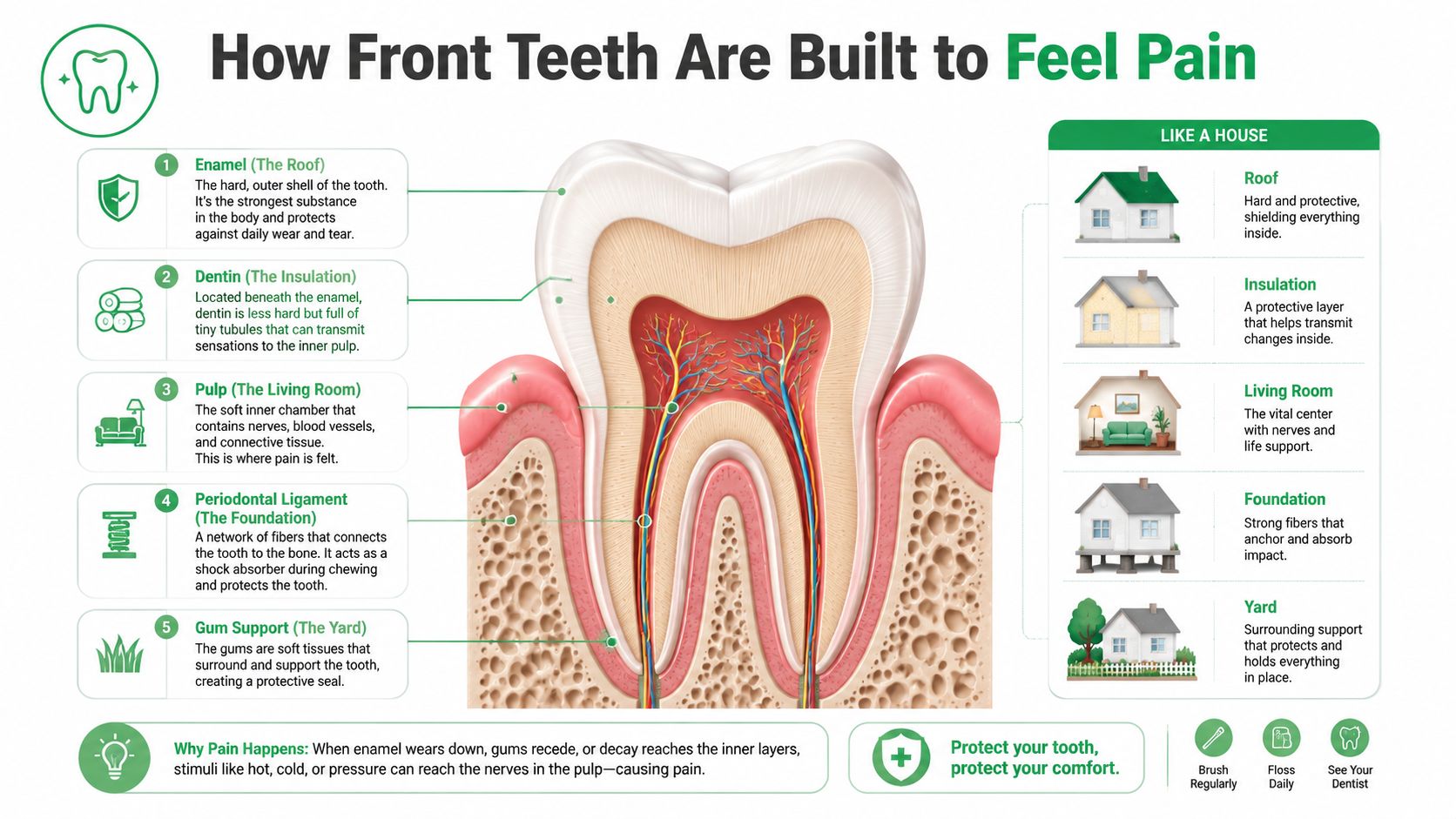
A front tooth may look like one solid piece, but it has layers that respond differently. Enamel is the protective outer shell, dentin lies beneath it, the pulp contains living tissue and nerves, and the periodontal ligament senses pressure around the root. This layered design explains why cold, heat, brushing, tapping, and biting can produce different pain patterns.
The outer layers
Enamel forms the hard surface that shields the inner tooth from temperature changes, acids, friction, and daily contact. It does not contain nerves, so discomfort usually starts after wear, decay, or a fracture exposes or affects the layer underneath.
Dentin sits below enamel and contains microscopic channels leading toward the nerve-containing pulp. Once dentin is exposed, cold drinks, sweet foods, cold air, or brushing may cause a quick, sharp sensation. Gum recession can uncover dentin near the gumline even when the visible crown appears intact.
A brief response often points toward exposed dentin or another surface sensitivity. Pain that continues after the trigger ends needs closer assessment because the pulp may also be irritated.
The inner tissue and foundation
The pulp contains blood vessels and nerves. Mild irritation may produce pain that settles quickly. Lingering pain, spontaneous throbbing, or discomfort brought on by heat suggests deeper inflammation and deserves prompt dental evaluation. Endodontic guidance describes brief cold sensitivity lasting up to 15 to 20 seconds as more consistent with reversible pulpitis, while lingering, spontaneous, or mainly heat-triggered pain is more consistent with irreversible pulpitis (endodontic pain diagnosis and sensibility testing).
The periodontal ligament surrounds the root and works like a pressure-sensing cushion. Trauma, heavy biting, clenching, or inflammation around the root can make it tender. As a result, a tooth may hurt when tapped or bitten even without much temperature sensitivity.
Front teeth encounter temperature changes and direct biting forces at the front of the mouth. Biting hard objects, opening packages with the teeth, or repeatedly stressing one edge can make symptoms more noticeable. Pain that seems to come from one tooth may involve the root tissues, jaw muscles, joint, or nearby sinus. That distinction helps determine whether the next step is routine scheduling or faster care.
Common Dental Reasons Your Front Teeth Hurt
A sharp twinge from cold water, pain when biting, or soreness after waking can come from several dental problems. The trigger narrows the possibilities, but it cannot confirm the cause by itself.
Cracks and fractures
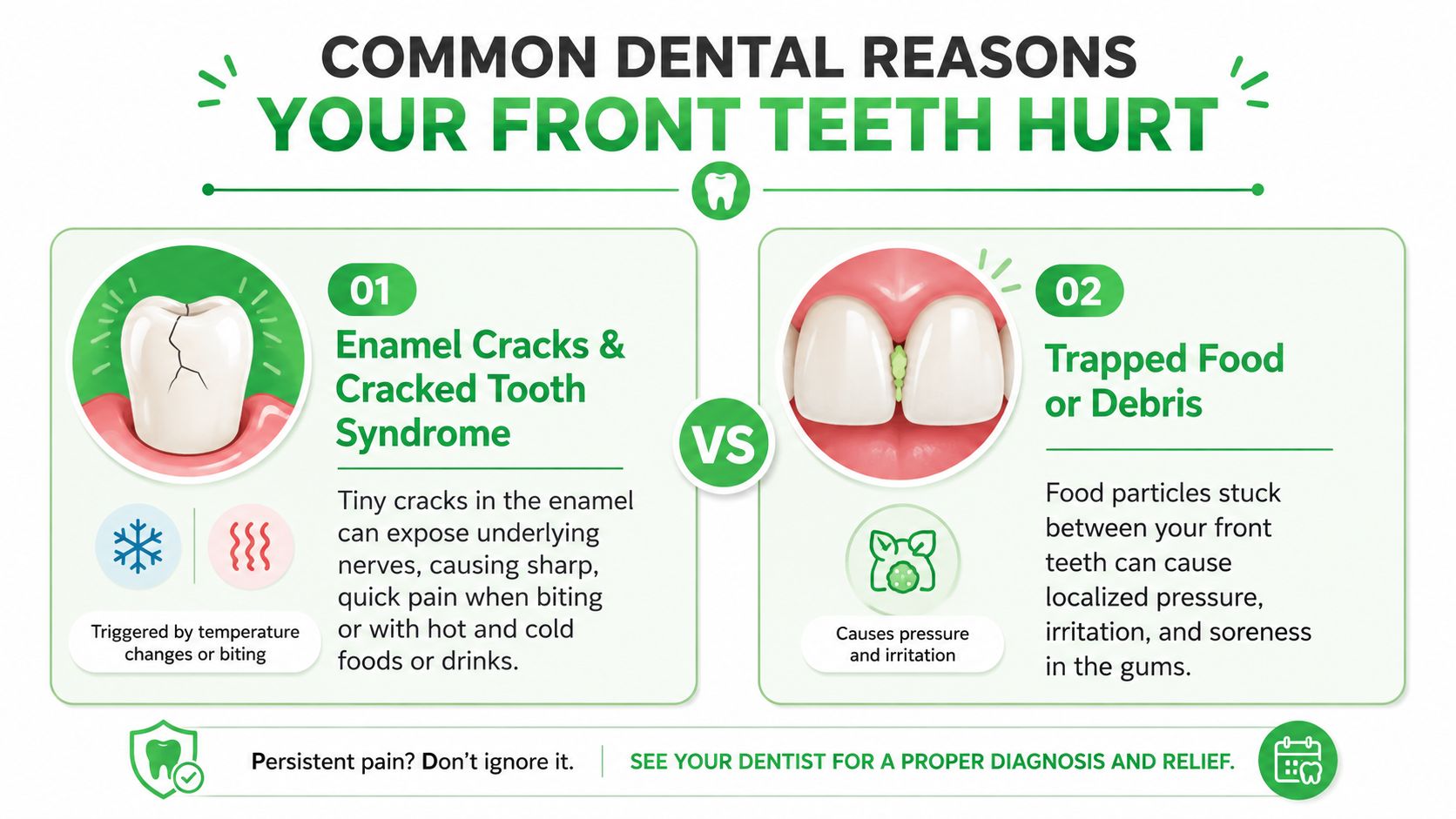
A fine enamel crack may cause little discomfort. A deeper fracture can reach the dentin, pulp, or supporting ligament. Cracked tooth syndrome commonly causes sharp pain when biting, particularly as pressure is released, and cold may intensify it. A clinical review of cracked tooth syndrome describes fracture lines that may extend from the crown through dentin and, in some cases, toward the pulp or periodontal ligament.
Front teeth can crack after biting hard food, a sports injury, or repeated clenching. The line may be too small to see in a mirror. If the pulp remains reversibly irritated and the source is identified accurately, conservative treatment may be possible. Avoid repeatedly testing the tooth with hard foods, because each test can place more force on the fracture.
Decay and exposed dentin
A cavity in a front tooth may react to sweets or cold drinks, especially after decay reaches dentin. Early decay may be hidden, so a dentist may use magnification, radiographs, and sensitivity testing to locate it.
Enamel wear and gum recession can expose a sensitive surface near the gumline. The pain is usually sharp and brief, triggered by brushing, cold water, or cold air. Forceful brushing, acidic drinks, and clenching may contribute, but the appropriate treatment depends on the examination.
Trauma
A bump to the mouth can chip enamel, loosen a tooth, or irritate the pulp without leaving an obvious mark. Pain may start immediately or appear later as the inner tissue reacts. Report any fall, collision, sports contact, or hard object you recently bit, even if the tooth looks normal.
Bite pressure and grinding
Clenching and grinding can make front teeth feel bruised, often after waking. The periodontal ligament and jaw muscles may both become tender. Uneven contact, a recent restoration, or repeated pressure on the incisors can also make biting uncomfortable. A restoration that changes contact may produce symptoms described among these bad-fitting crown symptoms.
The range of possible causes makes symptom patterns useful for triage, not self-diagnosis. Pain that follows trauma, becomes severe, lingers after a trigger, or comes with swelling should prompt faster dental contact. A mild, brief sensitivity without those features can usually be scheduled for a routine examination, where the dentist can distinguish a tooth problem from referred sinus or jaw pain.
When Front Tooth Pain Is Not Actually a Tooth Problem
You may feel a sharp ache in one front tooth while your nose is blocked, your jaw is tight, or cold air hits your face. The painful spot is not always the source. Nerves can report pressure or irritation from nearby tissues as discomfort in a familiar tooth location. This is referred pain, and it makes self-diagnosis unreliable.
Sinus pressure compared with dental pain
Inflamed or congested sinuses can create pressure near the roots of the upper teeth. The sensation may spread across several teeth instead of identifying one precise tooth, and it can occur with nasal congestion, facial pressure, or a recent respiratory illness. Bending or changing posture may also change how the pressure feels.
The pattern still needs interpretation. A tooth may hurt with a repeatable trigger such as biting or cold, while sinus-related discomfort often accompanies congestion and affects a broader area. Symptoms can overlap, so sinus pressure does not exclude a dental problem, and a toothache does not confirm sinus involvement.
Jaw strain and TMD
Temporomandibular disorders involve the jaw joint, chewing muscles, or connected structures. Tension in those muscles can send discomfort toward the front teeth after sleep, prolonged chewing, stressful periods, or daytime clenching. Morning jaw soreness, headaches, restricted movement, or clicking may support a jaw-related cause. Clicking by itself does not establish a diagnosis.
Notice whether the sensation changes as you clench, relax, open, or move your jaw. That pattern gives the dentist a reason to assess the bite and jaw along with the teeth. For background on evaluation and care, see this guide to TMD pain treatment in Houston.
Thermal allodynia
A tooth can look intact and still react painfully to a temperature change. Thermal allodynia describes an unusually painful response to cold air, chilled drinks, or brushing. The feeling may resemble an electric shock rather than ordinary sensitivity, and its sudden, hard-to-localize nature can be mistaken for a cavity.
A normal-looking tooth can still need testing. Appearance alone does not show whether the pulp, ligament, bite, gums, or nearby structures are responsible.
A 2024 emergency endodontic study describes dental pain arising from pulpitis, a non-vital pulp, a previously treated tooth, periodontal tissues, clenching, grinding, or temperature-related nerve sensitivity. The practical triage is straightforward: seek prompt dental advice for severe or lingering pain, swelling, or pain after trauma. Brief, mild symptoms without those features can usually be assessed through a routine examination. Pain that shifts with temperature, pressure, posture, and jaw movement deserves an evaluation that considers both the tooth and nearby structures.
Safe Self Checks Before You Call the Dentist
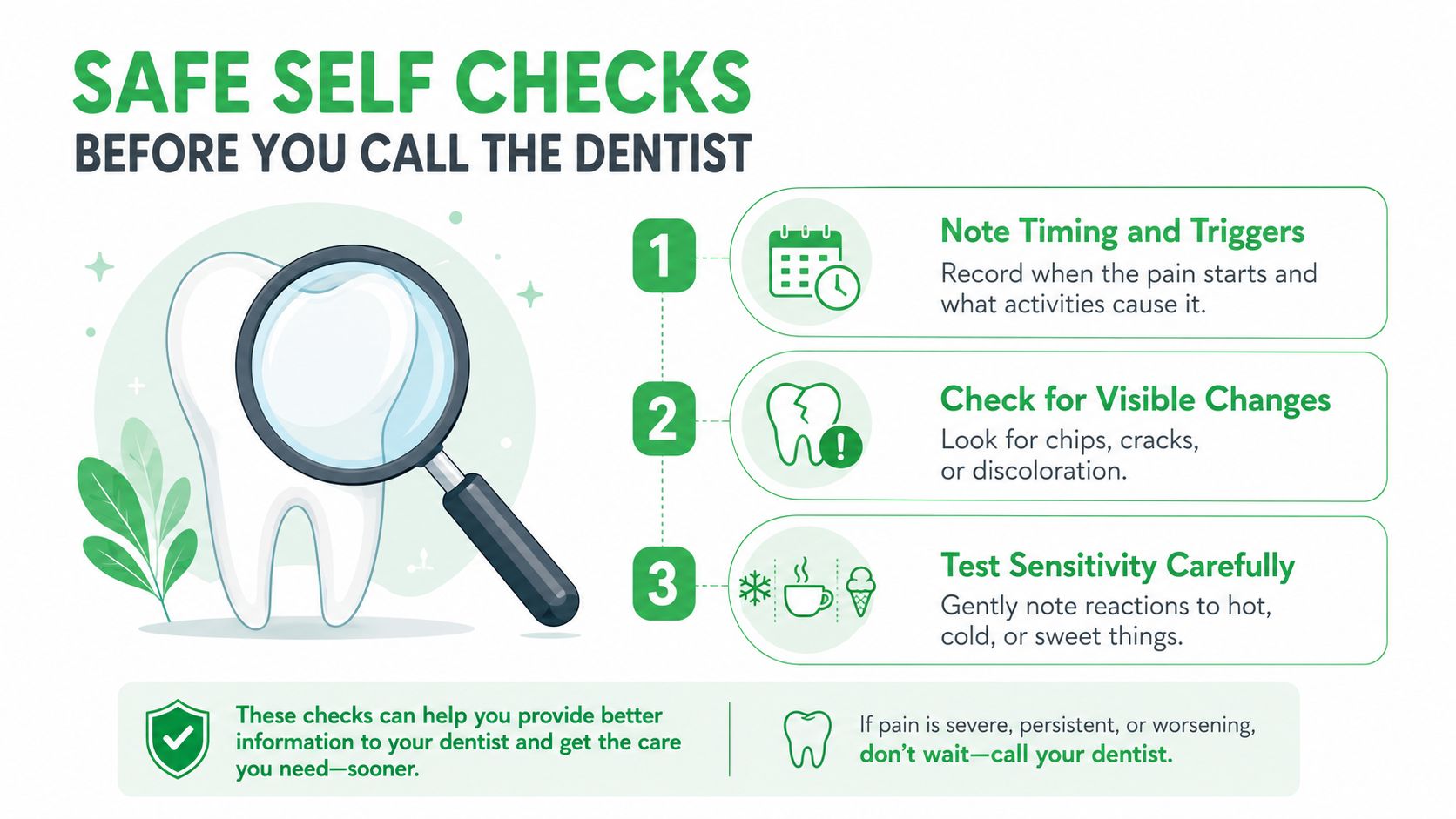
Home observations should help you describe the problem, not help you perform dental treatment. Avoid repeatedly provoking the tooth with ice, very hot drinks, hard foods, or forceful tapping. One careful observation is enough.
Record the pattern
Write down whether the pain is sharp, dull, throbbing, sore, or pressure-like. Note whether it begins with cold, heat, sweets, brushing, biting, waking, congestion, or jaw movement, and whether it stops quickly or lingers.
Look without manipulating
Use a mirror and good light to check for a visible chip, dark area, unusual discoloration, gum swelling, or a tooth that appears displaced. Don't pull on a loose tooth, scrape a suspected cavity, or place aspirin directly on the gum, since that can injure soft tissue.
Notice the surrounding symptoms
Check whether the gum bleeds during gentle brushing, whether your face looks swollen, and whether you have fever, a bad taste, recent trauma, nasal congestion, jaw tightness, or a headache. These details help the dentist compare a localized tooth problem with gum, sinus, or jaw-related pain.
A brief cold response that settles quickly isn't the same as pain that continues after the stimulus is gone. Endodontic testing commonly uses cold testing and electric pulp testing to assess pulp status, because symptoms alone can't reliably show whether the nerve is healthy or inflamed (evidence on pulp sensibility testing).
Don't wait on lingering pain. Temporary relief can hide a problem without removing its cause.
Until you're evaluated, choose softer foods and chew away from the painful area. Avoid extreme temperatures and keep brushing and cleaning gently. For additional practical guidance, see this toothache relief guide in Houston.
What to Do Next and When to Schedule an Exam at All Stars Dental
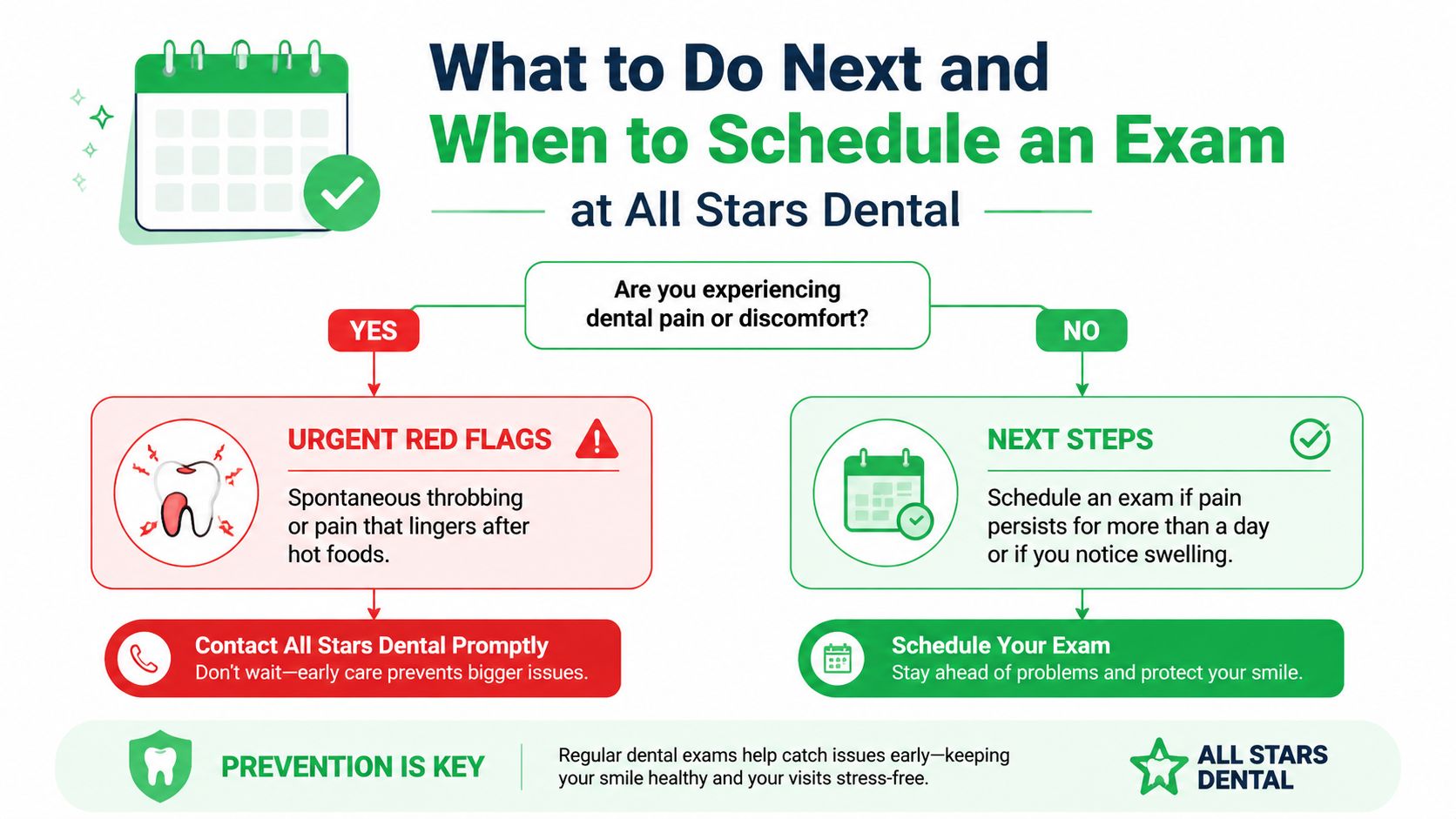
The pattern of your pain helps set the right pace for care. Contact a dentist promptly if you have spontaneous throbbing, pain that lingers after hot foods or drinks, facial swelling, fever, a tooth that became loose after trauma, or significant pain when biting. Swelling that affects swallowing or breathing needs emergency medical attention, not a routine dental visit.
Arrange a timely examination when sensitivity keeps returning, discomfort continues after the trigger ends, a crack or chip is visible, the gumline is tender, or morning soreness points to clenching. Mild pain still deserves assessment when it persists. A front tooth may look normal while its pulp or supporting ligament remains irritated.
Dental disorders also account for substantial emergency-care use. CDC data recorded an annual average of 1,944,000 emergency department visits for tooth disorders during 2020–2022, representing 1.4% of all emergency department visits (CDC dental-disorder emergency department data). A dental examination can help distinguish a problem suited to scheduled treatment from one needing faster escalation.
Temporary comfort while you wait
For adults who can safely take them, NSAIDs alone or combined with acetaminophen are recognized first-line options for temporary toothache and acute dental pain management. Follow the product label, and ask a pharmacist or clinician first if you have medication allergies, stomach or kidney disease, liver disease, are pregnant, take blood thinners, or have other health concerns. Do not exceed labeled doses or combine products containing the same ingredient.
Until you are evaluated, choose softer foods and chew away from the painful area. Avoid extreme temperatures, and continue brushing and cleaning gently. Relief should make waiting more comfortable, not postpone care when pain lingers or warning signs appear.
At 1301 Waugh Drive, Suite 200, Houston, All Stars Dental provides examinations and treatment options that can include restorative care, root canal therapy, gum care, bonding, and TMD evaluation. The practice quotes fees before work begins, offers financing options, and accepts online appointment requests and text-message booking.
Record the trigger, duration, and accompanying symptoms today. Use that information to request care when the pattern persists or includes warning signs.
Visit All Stars Dental to request an examination for front-tooth pain, sensitivity, cracks, bite concerns, or jaw-related discomfort. The Houston team can evaluate the tooth and surrounding structures, explain the findings clearly, and discuss appropriate restorative, root canal, gum, or TMD care.