
What Is Scaling and Root Planing: A Complete Deep Cleaning
You're sitting in the dental chair after an examination, and your dentist says a regular cleaning won't be enough. You may be wondering whether “deep cleaning” is just a more expensive name for the same appointment, or whether something serious is happening below your gums.
Scaling and root planing, commonly called SRP, is a nonsurgical treatment for periodontal disease. It removes hardened deposits and bacterial biofilm from areas a routine cleaning can't reach, then smooths the affected root surfaces so inflamed gum tissue has a cleaner surface against which to heal. The recommendation isn't based on bleeding alone. Your dentist considers pocket measurements, bleeding during probing, X-ray findings, and evidence of attachment or bone loss.
Understanding the difference between gingivitis and periodontitis helps explain why two patients with bleeding gums may receive different treatment plans. SRP is usually the first stage of care for periodontitis, not a permanent cure delivered in one visit.
Table of Contents
- Why Your Dentist Recommended More Than a Regular Cleaning
- How the Scaling and Root Planing Procedure Works
- Who Needs Scaling and Root Planing and How Dentists Decide
- Scaling and Root Planing Versus Regular Cleanings and Surgery
- Realistic Outcomes and What the Evidence Shows
- Recovery Timeline and Aftercare Best Practices
- Common Misconceptions About Deep Cleaning Procedures
Why Your Dentist Recommended More Than a Regular Cleaning
A routine cleaning is designed for healthy gums or mild inflammation. The hygienist removes plaque and tartar from the visible tooth surfaces and around the gumline. That approach works when the gum tissue fits closely around the teeth and deposits remain accessible.
Periodontal disease changes the condition. Inflammation can cause the gum to pull away from the tooth, creating a periodontal pocket. Tartar and bacterial biofilm can then collect below the gumline, where a toothbrush and ordinary cleaning instruments may not reach safely or thoroughly.
The practical distinction: A regular cleaning maintains accessible surfaces. SRP treats disease in the space between the tooth and the gum.
What the two terms mean
Scaling is the removal of hardened deposits, including tartar or calculus, from above and below the gumline. Think of mineral buildup on a faucet. Wiping the surface removes loose residue, but hardened deposits require a tool that can break them away without damaging the underlying surface.
Root planing is the second part. After deposits are removed, the clinician smooths irregular areas of the root and removes residual calculus along with contaminated cementum and dentin from the periodontal pocket. The goal isn't to make the root unnaturally polished. It's to leave a cleaner, more compatible surface that allows the gums to heal and adapt.
Dental literature formally distinguished scaling from root planing in the 1980s, and root planing became indexed as a recognized procedure in 1992, reflecting the development of SRP as a structured, two-part approach rather than a simple scraping appointment (periodontal literature review).
Why your treatment plan may look different from someone else's
Dentists don't prescribe SRP because a patient reports occasional bleeding. They examine the pattern and severity of inflammation, the depth of the pockets, and whether supporting tissues have been affected. A patient with shallow, reversible gingival inflammation may need improved home care and a routine cleaning, while a patient with deeper pockets and bone loss may need SRP.
That's why the recommendation can feel surprising. The visible part of the teeth may not look dramatically different, but the clinical findings below the gumline can tell a different story.
How the Scaling and Root Planing Procedure Works
SRP is mechanical treatment. The clinician uses specialized instruments to remove the material driving inflammation, then works the root surface so the gum can recover under cleaner conditions.
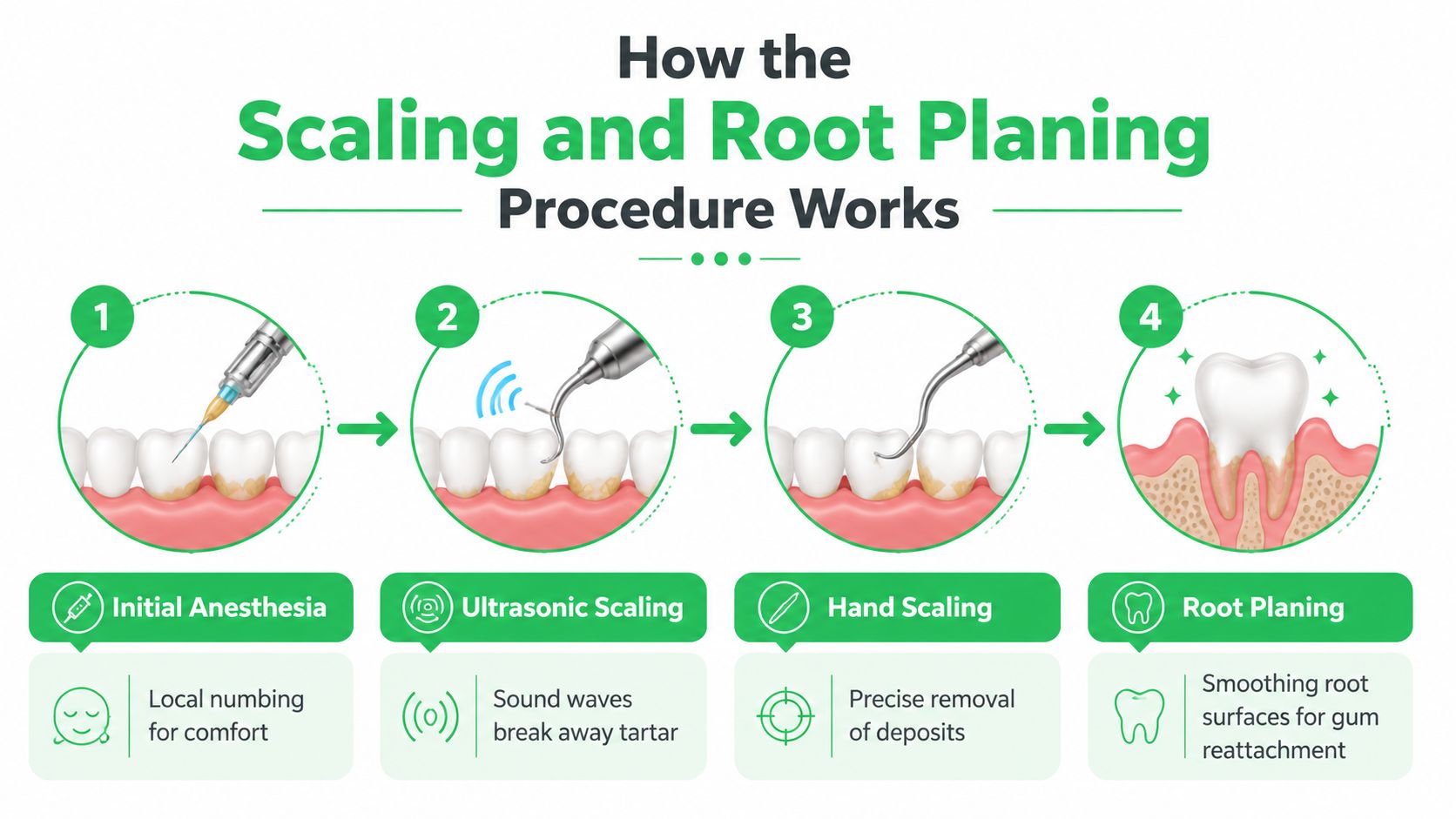
Step one is planning and comfort
Your dentist or hygienist reviews the periodontal measurements and identifies which areas require treatment. Local anesthesia is commonly used so the gums and surrounding tissues are numb while the clinician works below the gumline. You should tell the team if you're anxious, sensitive, or concerned about staying comfortable. They can pause, adjust the anesthetic, and explain what they're doing.
Scaling removes the hard deposits
The clinician may use an ultrasonic scaler, which vibrates against calculus and uses water to flush the area. The sound and water can feel unfamiliar, but the instrument helps loosen deposits efficiently.
Hand instruments called curettes provide more controlled access. They allow the clinician to feel the root surface and remove remaining deposits from grooves, root contours, and pocket areas that require precision.
Root planing addresses the affected surface
Once calculus has been removed, the clinician uses curettes or other periodontal instruments to smooth rough sections of the root. The purpose is to remove residual contaminated material and reduce the places where bacterial deposits can remain attached.
Treatment is often divided by quadrant, meaning one section of the mouth is treated at a time. Dividing the appointment can improve access, support patient comfort, and let the clinician work carefully instead of rushing through the entire mouth.
The procedure may leave your gums feeling tender afterward because the clinician has treated inflamed tissue rather than merely polishing exposed enamel. That tenderness is usually part of the short-term recovery process, while the longer-term result depends on healing, home care, and reassessment.
A visual walkthrough can make the instruments and sequence easier to understand:
Who Needs Scaling and Root Planing and How Dentists Decide
The key question isn't, “Do my gums bleed?” It's, “Do the examination findings show periodontal disease that requires treatment below the gumline?”
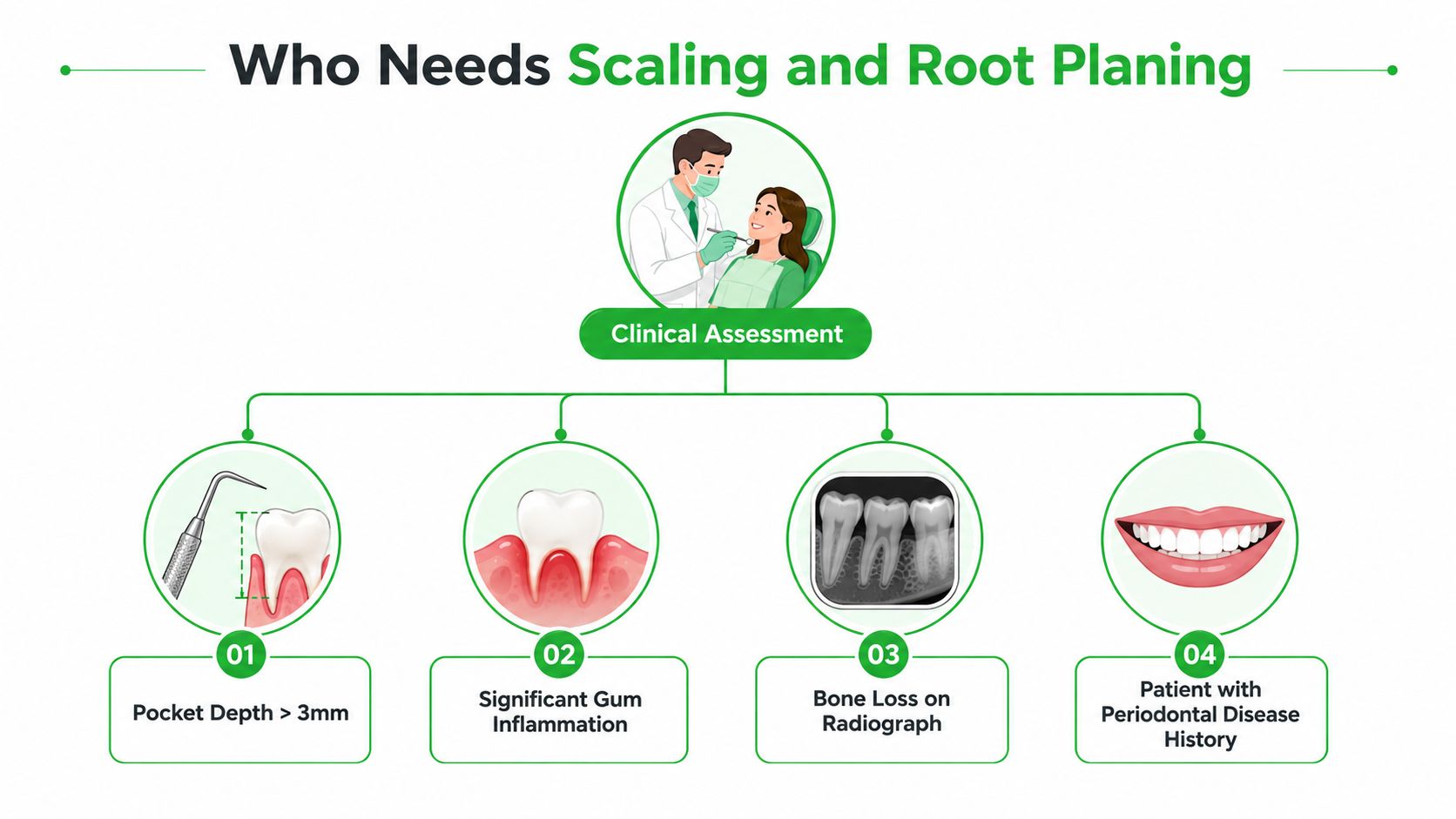
Your dentist measures periodontal pockets with a small probe. A pocket is the space between the gum and tooth. A shallow measurement can often be cleaned with routine methods, while a deeper pocket gives bacteria and calculus more room to remain protected from daily brushing.
The measurements that shape the recommendation
A treatment decision usually combines several findings:
- Pocket depth: Current payer and clinical criteria commonly support SRP when pockets are greater than 4 mm, especially when other disease findings are present (utilization criteria for periodontal services).
- Bleeding on probing: Bleeding indicates active inflammation at the examined site. It matters most when it appears alongside deeper pockets or other evidence of periodontal breakdown.
- Radiographic bone loss: X-rays help show whether the bone supporting the teeth has been affected. A dentist uses this information with the probing chart rather than relying on an image alone.
- Clinical attachment loss: This measures the loss of the gum's supporting attachment around the tooth. It helps distinguish active periodontal disease from a shallow area that's inflamed but hasn't lost supporting attachment.
Why one finding rarely decides everything
Bleeding gums deserve an evaluation, but bleeding alone doesn't automatically establish the need for SRP. Conversely, a person may have periodontal disease with limited symptoms, which is why probing and radiographs are important even when discomfort is absent.
Pockets around 5 mm or deeper can be technically difficult to debride because root anatomy and irregularities limit instrument access. Expert guidance identifies these sites as requiring especially thorough treatment, while persistent inflamed deep sites after SRP may be considered for surgical periodontal therapy (clinical review of nonsurgical periodontal treatment).
For a plain-language overview of treatment choices, see this guide to gum disease treatment. The right plan depends on the entire periodontal chart, not on a single symptom or a single number.
Scaling and Root Planing Versus Regular Cleanings and Surgery
SRP sits between routine preventive care and periodontal surgery. It's more extensive than a standard cleaning, but it doesn't involve opening the gum tissue surgically.
A regular cleaning generally focuses on accessible surfaces above or near the gumline. SRP reaches into periodontal pockets and removes deposits associated with active disease. Surgical therapy, such as flap surgery, may be considered when deep, inflamed areas remain after careful nonsurgical treatment.
| Criteria | Routine Cleaning | Scaling and Root Planing | Periodontal Surgery |
|---|---|---|---|
| Treatment depth | Mainly above the gumline and accessible margins | Below the gumline within periodontal pockets | Direct surgical access to deeper root and bone areas |
| Primary purpose | Preventive maintenance | Initial nonsurgical treatment for periodontitis | Management of persistent or complex disease |
| Anesthesia | Often not needed | Local anesthesia is commonly used | Local anesthesia is required, with additional comfort planning as appropriate |
| Recovery | Usually minimal | Tenderness or sensitivity can follow | More involved healing and postoperative care |
| Typical indication | Healthy gums or routine plaque and tartar | Deeper pockets with inflammation and supporting-tissue findings | Deep sites that remain inflamed after thorough SRP or need direct access |
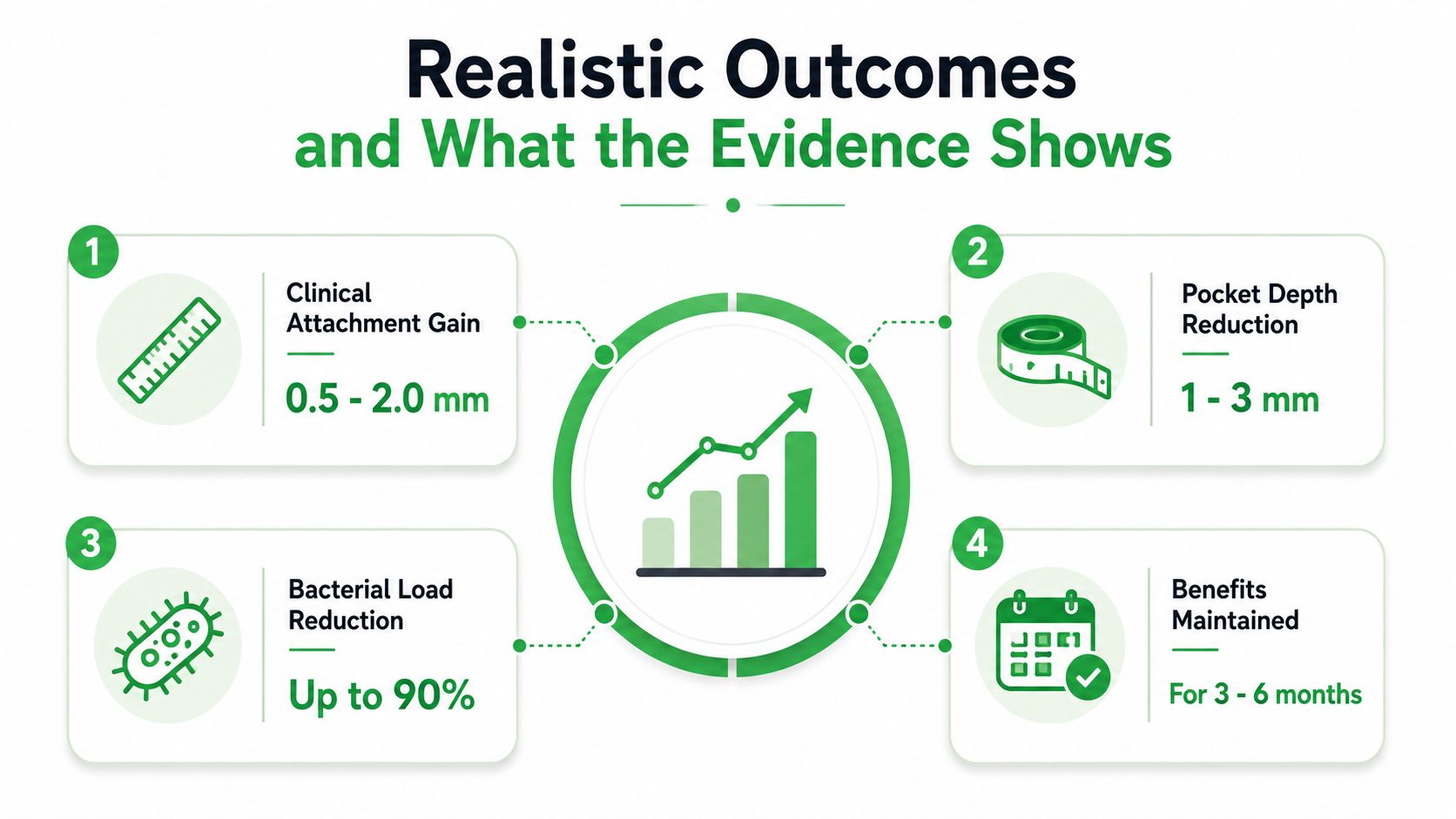
Evidence reviews support SRP as the standard nonsurgical first-line treatment for chronic periodontitis. A synthesis of 72 trials found an average clinical attachment level gain of about 0.5 mm, a measurable but modest improvement rather than dramatic regeneration (Cochrane evidence review).
That modest result explains the staged approach. Your dentist starts with the least invasive treatment that addresses the disease, then reassesses the tissue. If the pockets improve and inflammation settles, maintenance may be enough. If deep sites remain active, the next step can involve additional instrumentation or surgery.
Realistic Outcomes and What the Evidence Shows
SRP can lower the bacterial burden and inflammation inside periodontal pockets, but it cannot rebuild every lost structure or guarantee that every deep pocket will close. Dentists judge the response at reassessment by checking pocket measurements, bleeding, tissue firmness, and tooth stability. The purpose is control of active disease, followed by maintenance or another treatment stage if needed.
The evidence supports a moderate clinical benefit. Earlier review findings already show that attachment improvement is measurable but limited, rather than dramatic regeneration. That distinction matters if you expect the gums to “grow back” immediately. Healing can reduce inflammation and improve the seal around a tooth, while lost bone or gum tissue may not return on its own.
Results depend on the starting point
Pocket depth affects how completely instruments can reach and remove calculus. In a classic comparison, surfaces in 1 to 3 mm pockets were cleared more consistently than surfaces in deeper pockets. For 4 to 6 mm pockets, the comparison showed 43% versus 76%, and for pockets deeper than 6 mm, it showed 32% versus 50%, depending on the treatment approach (classic scaling and periodontal surgery comparison).
These figures do not predict an individual result. They explain why deeper sites may need careful reassessment and, if inflammation persists, additional instrumentation or periodontal surgery.
A 2024 randomized study found a statistically significant reduction in bleeding on probing at 24 weeks after SRP. The least-squares mean reductions from baseline were 0.24 and 0.02 in the two study groups, with a between-group difference of 0.22 and p<0.0001 (randomized clinical study). The finding supports reduced inflammation, but it does not make healing identical for every patient.
Tooth stability can improve as inflammation settles. At 12 months, 71.2% of class 1 mobile teeth and 42.2% of class 2 mobile teeth became clinically stable (study on tooth mobility after SRP).
Your result depends on initial pocket depth, root anatomy, debridement quality, smoking or other health factors, daily plaque control, and follow-up care. SRP is the foundation of a staged plan, not a one-time cure.
Recovery Timeline and Aftercare Best Practices
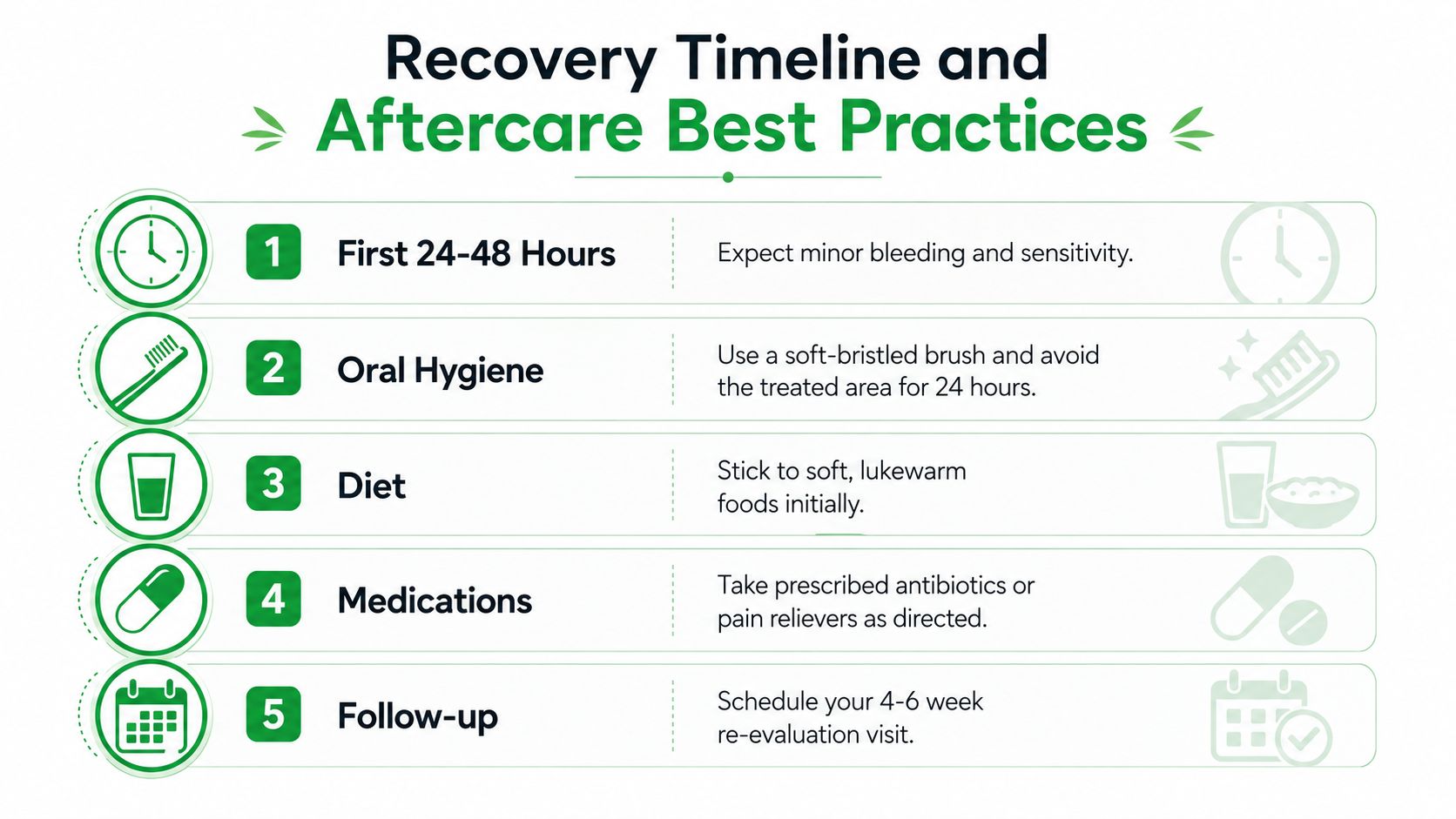
Most patients notice tenderness or sensitivity after SRP, especially where the gums were inflamed or the roots were exposed during healing. Minor bleeding can occur early, but your dental team should give you instructions specific to the areas treated.
The first day
Choose soft, lukewarm foods while the numbness wears off, and avoid chewing directly on treated areas. A soft-bristled toothbrush helps reduce irritation. Your clinician may recommend a warm saltwater rinse or a prescribed antimicrobial rinse, but don't use a product that wasn't recommended for you.
Follow any prescription instructions exactly. If you've been given pain relief medication, use it as directed and ask before combining products.
The following days and weeks
Sensitivity should gradually settle as the gums heal. Continue brushing gently and cleaning between the teeth, adjusting technique rather than abandoning oral hygiene. Plaque left around healing tissue can prolong inflammation.
Call your dental office if bleeding is persistent or heavy, swelling worsens, pain becomes severe, you develop fever, or you notice another symptom that concerns you. For practical guidance on managing bleeding after treatment, review how to stop bleeding gums after dental work.
The follow-up visit is part of treatment, not an optional add-on. Your dentist or periodontist checks pocket depths, bleeding, tissue response, and areas that may need further instrumentation. Long-term control also requires periodontal maintenance after treatment, with visit timing based on your disease pattern and clinician's recommendation.
Common Misconceptions About Deep Cleaning Procedures
Myth one, SRP is just a regular cleaning with a different name. It isn't. A routine cleaning addresses accessible deposits, while SRP treats bacterial buildup and calculus inside periodontal pockets and includes root-surface instrumentation.
Myth two, one appointment permanently cures gum disease. SRP can control the active infection and create better conditions for healing, but periodontal disease can return if plaque accumulates and maintenance stops. Your dentist needs to reassess the tissue because persistent deep pockets may need additional treatment.
Myth three, bleeding alone proves that SRP is necessary. Bleeding signals inflammation, but the treatment decision also considers pocket depth, attachment loss, and bone findings. Shallow inflamed gums and established periodontitis aren't managed in exactly the same way.
Myth four, the procedure must be painful. Local anesthesia helps keep treatment comfortable, and ultrasonic scalers and hand curettes allow the clinician to work precisely. Tenderness and sensitivity afterward are possible, but you should tell the dental team immediately if you feel discomfort during treatment.
SRP has a long clinical history and remains a foundational nonsurgical periodontal treatment. Ask your dentist to review your pocket chart with you, identify which sites need SRP, and explain what the reassessment will determine.
If you're in central Houston and have bleeding gums, deep periodontal pockets, or questions about whether you need a routine cleaning or SRP, All Stars Dental provides gum disease evaluations and periodontal treatment with clear explanations before care begins. Request an appointment to discuss your findings, treatment options, fees, and a maintenance plan for your oral health.