
7 Bad Fitting Crown Symptoms and What to Do Next
Is your dental crown causing problems, or is your mouth just “getting used to it”? That's the question patients ask most often, and it's the wrong place to start. A crown should feel natural once the early adjustment period passes, and when it doesn't, the symptoms often point to a fit problem that needs real attention. Poor fit can show up as pain, bite changes, gum irritation, or food getting stuck, and those signs can map to measurable problems like loosening, recurrent decay, or the later need for root canal treatment, not just temporary annoyance (clinical benchmark on crown complications). If your crown feels off, trust that instinct and get it checked.
Table of Contents
- 1. Persistent Tooth Pain and Sensitivity
- 2. Visible Gaps Between Crown and Gum Line
- 3. Gum Inflammation, Swelling, and Bleeding
- 4. Crown Feels High or Creates Uneven Bite
- 5. Crown Feels Loose or Mobile
- 6. Visible Dark Line or Discoloration at Crown Margin
- 7. Frequent Food Trapping and Difficulty Cleaning
- Bad Crown Fit: 7-Symptom Comparison
- Your Next Steps for a Healthy, Comfortable Crown
1. Persistent Tooth Pain and Sensitivity
Pain is the symptom that most often tells you a crown is more than a little “off.” A crown that fits poorly can overload one side of the tooth, irritate the nerve, or leave a margin where temperature changes and bacteria reach the tooth underneath. That's why sharp pain when chewing, cold sensitivity that keeps showing up, and throbbing soreness are not the same thing as routine post-procedure tenderness.
A practical rule helps here. Mild soreness after a new crown can be normal for a short time, but pain that persists beyond the usual adjustment period or gets worse deserves a dental exam (dental guidance on normal adjustment and persistent symptoms). If pain starts when you bite on the crowned side, keep that side off-limits until someone checks the bite and the margin.
Practical rule: If the crown hurts when you chew, don't keep “testing” it all day. Repeated biting can make an irritated tooth feel worse and can also reveal whether the crown is too high.
At All Stars Dental, an evaluation usually starts with bite checks, visual inspection, and a review of whether the symptom pattern suggests adjustment, recementation, replacement, or a deeper issue such as root canal treatment. That's why persistent pain is one of the clearest bad fitting crown symptoms, especially when it begins soon after placement or appears weeks later after a quiet period.
A patient who notices cold sensitivity weeks after a crown, for example, should stop assuming it's temporary. That can mean a gap has opened up, or the tooth underneath is becoming irritated. If the pain is severe, ask for a same-day appointment.
What to do next
- Avoid chewing directly on the crowned tooth until it's examined.
- Track when the pain happens and what triggers it, hot drinks, cold water, or biting.
- Call promptly if pain persists beyond the normal adjustment window.
- Skip very hot or cold foods while you're waiting to be seen.
- Request urgent care if the pain is throbbing or getting stronger.
For patients trying to separate facial pain from tooth pain, the difference matters. Pain that follows chewing or temperature change points more strongly to the crown itself than to unrelated jaw or nerve issues, even though both need professional judgment (when face pain means neuralgia).
2. Visible Gaps Between Crown and Gum Line
A crown should sit flush against the tooth. When you can see a gap, ledge, or overhang near the gum line, the restoration isn't sealing the way it should. That space becomes a trap for food debris and plaque, which is why gaps often lead to recurring irritation instead of staying harmless.
The first clue is sometimes visual. Patients may notice a dark edge around the crown months after placement, or they may feel food catching in one spot every time they eat. Those are classic signs that the margin is not meeting the tooth cleanly, and the problem can worsen if it's ignored. A crown that leaves a pocket behind is hard to clean well with ordinary brushing alone.
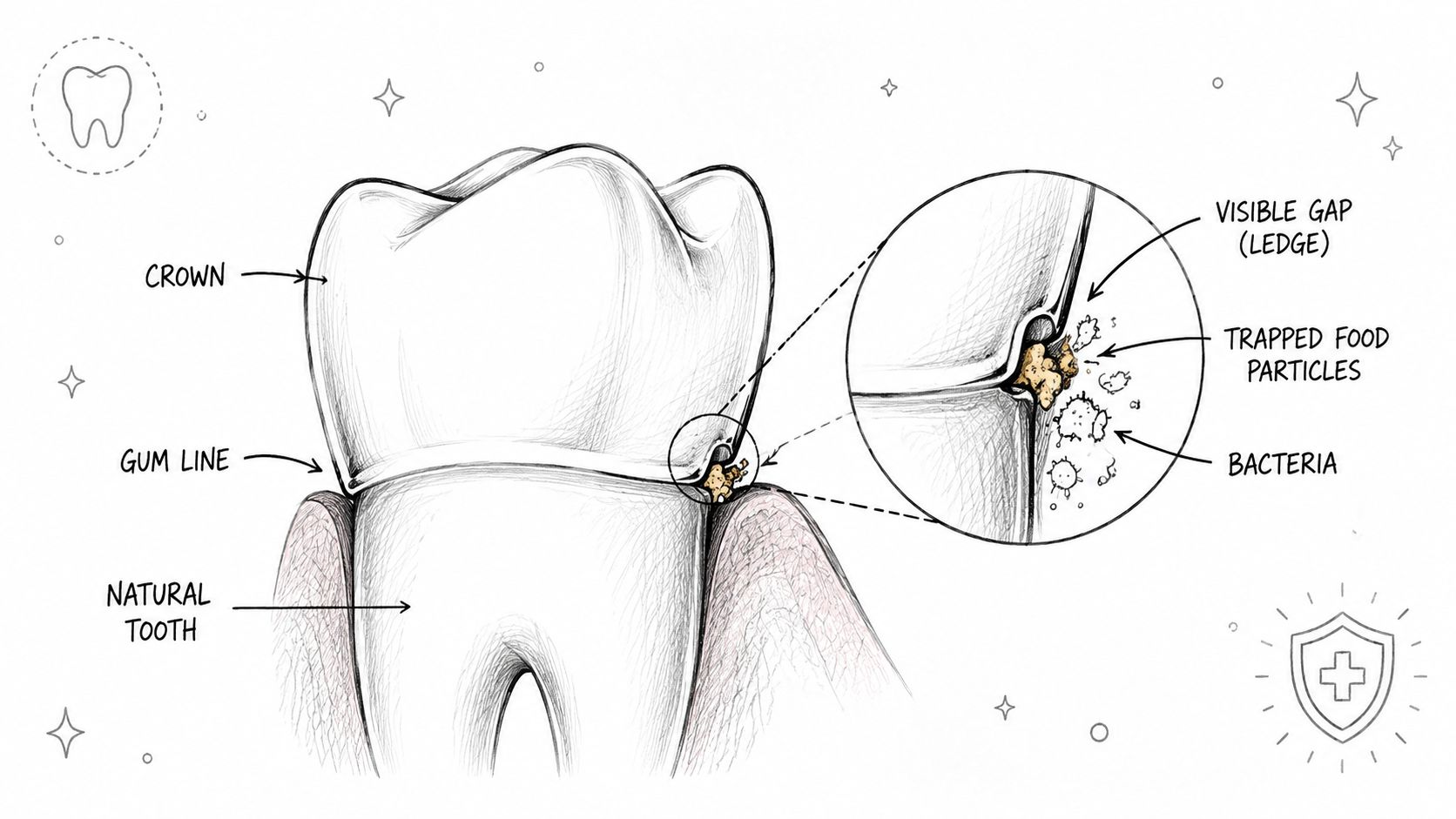
The cleanest way to think about it is simple. A well-fitted crown protects the tooth. A gapped crown invites a cycle of food trapping, gum irritation, and decay risk around the margin, which is why visible spacing deserves attention early, not after the tooth has started to break down (signs of crown margin problems).
At an evaluation, the dentist may look at the margin from several angles, check whether floss catches, and decide whether the issue is a minor contour problem or a restoration that needs replacement. In a practice like All Stars Dental, that assessment often includes intraoral photos or other imaging so the problem can be documented and compared over time.
Helpful next steps
- Use a water flosser to reduce debris around the margin.
- Thread floss carefully instead of snapping it down hard.
- Avoid sticky foods that lodge easily in gaps.
- Brush with a soft-bristled brush to protect irritated tissue.
- Ask for imaging or photos if you want to track a changing margin.
A gap isn't just a cosmetic issue. It usually means the crown has lost the seal that makes it function like part of the tooth.
3. Gum Inflammation, Swelling, and Bleeding
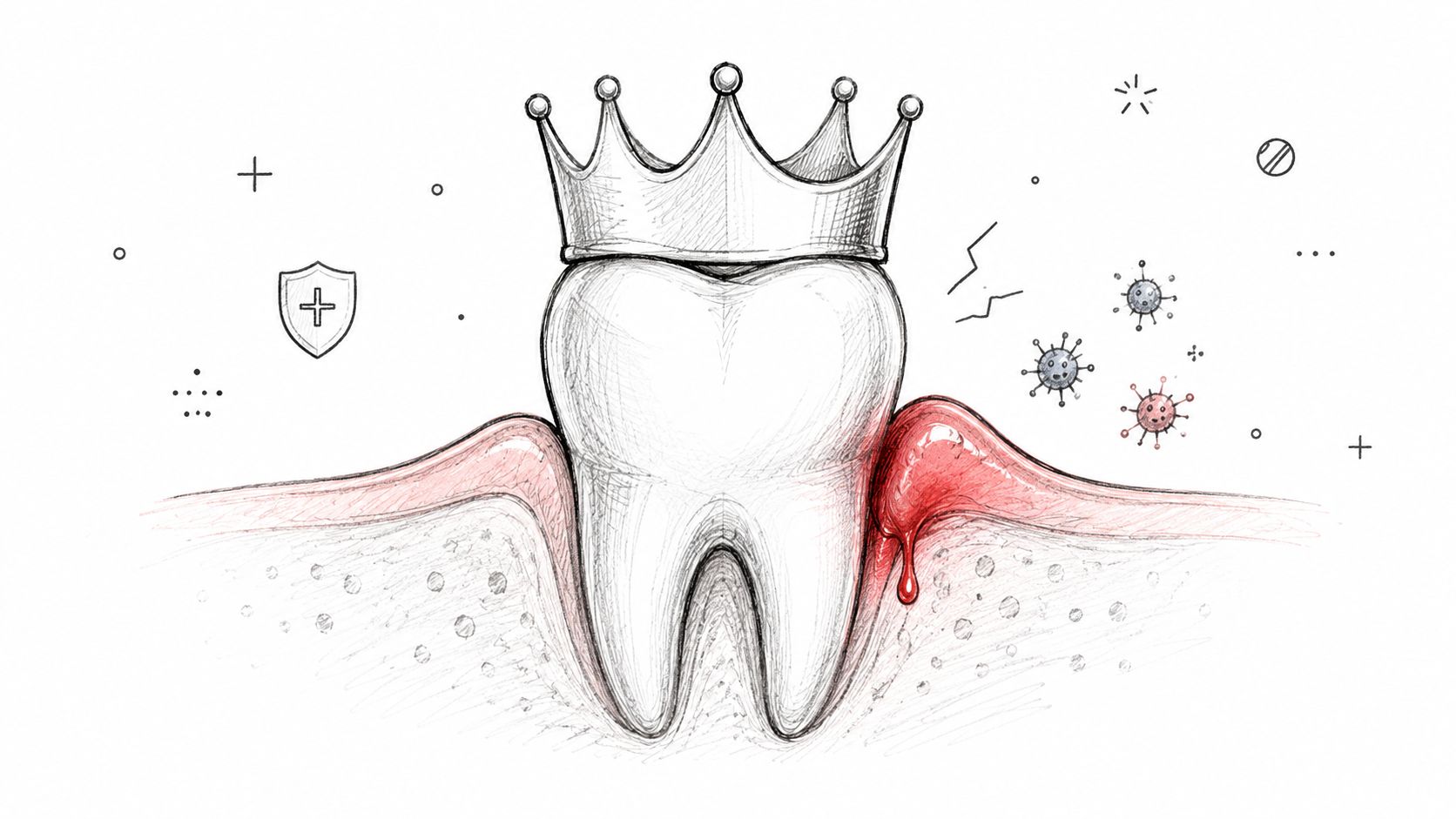
Gums that stay red, puffy, or easy to bleed around a crown are sending a clear message. The crown edge may be irritating the tissue, trapping plaque, or both. Even patients with good home care can run into this problem if the margin is rough, open, or slightly overhanging.
The pattern often shows up in one specific area. One side of the crown looks swollen while the rest of the mouth looks calm. Floss may trigger bleeding in the same spot every time. That kind of localized reaction suggests the crown margin is creating a chronic irritation point rather than a one-off brushing issue.
A good comparison is this. Healthy gums should tolerate a crown without needing constant rescue care. When the gum tissue keeps reacting, the restoration may be creating a pocket that's difficult to clean, and that can support gum disease around the tooth (crown-related gum infection and treatment considerations).
If bleeding starts only around one crowned tooth, pay attention to the crown before blaming your brushing technique.
At an appointment, evaluation usually includes checking whether the crown margin is flush, whether there's plaque retention, and whether the tissue needs periodontal treatment in addition to crown correction. Sometimes the fix is a simple adjustment. Other times, the restoration needs to be remade because the margin is the source of the inflammation.
Here's what helps while you're waiting to be seen.
- Use a soft-bristled toothbrush to avoid extra trauma.
- Rinse only with products recommended by the dentist if the area is inflamed.
- Try gentle water flossing when traditional floss feels too harsh.
- Avoid alcohol-based mouthwash if the tissues are already irritated.
- Book a periodontal evaluation if swelling or bleeding keeps returning.
A crown that keeps inflaming the gums isn't just inconvenient. It can create a long-term environment where cleaning gets harder and the surrounding tissue stays under stress.
4. Crown Feels High or Creates Uneven Bite
A crown that feels “high” is one of the easiest fit problems for a patient to notice, and one of the easiest to dismiss. The tooth may touch first when you close, or it may feel like you're landing on one spot instead of on a balanced bite. That uneven contact matters because chewing forces are supposed to spread across several teeth, not hammer one crowned tooth repeatedly.
This symptom often shows up immediately after placement, but it can also become obvious after the numbing wears off or after a few days of eating. Some patients describe a clicking or hitting sensation. Others notice jaw tightness, headaches, or soreness near the joint after meals.
A bite that's off can also create wear on the tooth that hits the crown first, and it can loosen the crown over time if the force keeps concentrating in one area. That's why bite discomfort is one of the most important bad fitting crown symptoms to address quickly (guidance on bite discomfort and timing of symptoms).
At All Stars Dental, bite checks usually involve articulating paper, small adjustments, and a retest of how the teeth meet. If jaw pain or headache symptoms are part of the picture, the dentist may also consider whether the crown is aggravating existing TMD symptoms and whether the bite needs more than a quick polish.
What patients should do
- Stop chewing hard foods on that side until the bite is balanced.
- Report jaw pain or headaches right away, don't wait and see for weeks.
- Ask for another adjustment visit if the first one didn't solve the issue.
- Tell the dentist exactly where the tooth hits first when you close.
- Request a fresh bite check if symptoms change after a few days.
A crown should blend into your bite, not announce itself every time you close your mouth. When it feels high, it usually is.
5. Crown Feels Loose or Mobile
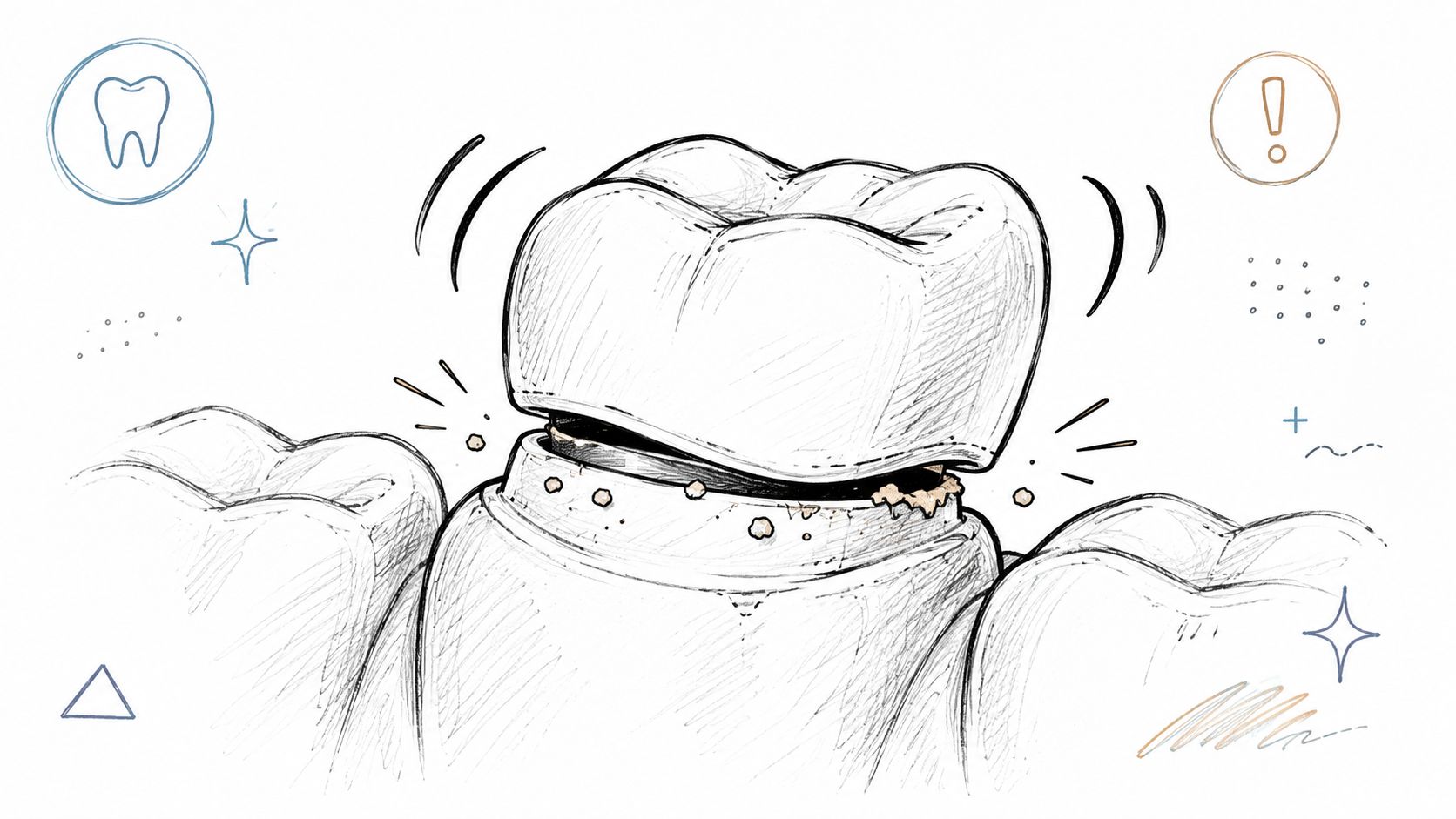
A loose crown is never something to ignore, even if it still looks intact. If the crown wiggles when you touch it or shifts slightly while chewing, the bond has likely failed or wasn't secure enough from the start. Once movement begins, bacteria can get under the margin more easily, and the risk shifts from discomfort to decay or infection of the tooth underneath.
Sometimes patients first notice a loose crown when food catches under one edge. Others feel a faint click during chewing. If the crown comes off completely, that becomes urgent because the tooth is now exposed and vulnerable.
A loosened restoration can sometimes be re-cemented if the tooth underneath is healthy and the crown still fits correctly. If the crown has repeatedly come loose or the tooth has changed shape, replacement is usually the safer route. That distinction is one of the reasons a prompt exam matters.
Practical rule: Don't glue a loose crown back at home. Temporary fixes can interfere with proper cleaning and may make the tooth harder to save.
At an evaluation, the dentist will check whether the crown can be re-cemented, whether decay has formed under it, and whether the tooth structure still supports the restoration. If the crown has fallen out, bring it with you, because even an old crown can sometimes tell the dentist something useful about fit and wear.
What to do next
- Stop chewing on the loose side to prevent further damage.
- Keep the crown safe if it comes out, and bring it to the visit.
- Call right away if the crown is moving or slipping when you chew.
- Ask about the condition of the tooth underneath if looseness has been going on for a while.
- Find out whether recementation or replacement makes more sense for your case.
A loose crown is a mechanical warning sign. The longer it moves, the more likely it is that the tooth underneath will pay the price.
6. Visible Dark Line or Discoloration at Crown Margin
A dark or gray line where the crown meets the gum can mean several different things, and none of them should be ignored. It may be the edge of an older metal-based crown showing through, gum recession revealing tooth structure, or decay developing at the margin. Whatever the cause, the visible change is telling you that the interface between crown and tooth is no longer ideal.
This symptom often starts subtly. A patient may notice it in a mirror, in photos, or under bright bathroom lighting. In some cases, the line appears months or years after placement, which is why regular monitoring matters even when the crown felt fine at first.
Cosmetic concern is only part of the story. Discoloration at the margin can also reflect bacteria getting under the edge, which raises the chance of recurrent decay and a failing restoration. If the gum has receded enough to expose a darker substructure, the tooth may also be harder to keep clean and healthier-looking over time (crown margin and scanning considerations).
At All Stars Dental, the evaluation usually includes a close look at the margin, surrounding gum tissue, and the type of crown material involved. A tooth-colored replacement may be the right answer when the issue is visibility, but the underlying cause still needs to be corrected so the new crown doesn't repeat the same problem.
Signs worth documenting
- A line that changes color over time near the gum.
- New recession around the crown that exposes more tooth or metal.
- A shade difference in photos compared with earlier visits.
- A dark edge paired with sensitivity or food trapping.
- A cosmetic change that appears after crown placement rather than before.
Patients who want a more natural result should ask about all-ceramic options when appropriate, but material choice alone won't fix a poor margin. Fit matters first, appearance second.
7. Frequent Food Trapping and Difficulty Cleaning
Food trapping around a crown is one of the most practical signs that something isn't right. If floss shreds, catches, or requires a lot of effort in the same spot every day, the crown may have irregular contours, an open contact, or an overhanging margin. Those defects create little pockets where food stays behind after meals, and that trapped debris can inflame the gums and feed decay.
Patients often describe this problem long before a visible cavity appears. They notice a stubborn spot that always catches meat, rice, or fibrous foods, even when brushing is consistent. They may also notice persistent bad breath or a taste that keeps returning after meals.
Frequent food impaction matters because it isn't just annoying, it makes the area harder to clean and raises the chance of gum irritation and secondary decay over time (food retention and margin problems around crowns). If the crown contacts the neighboring tooth too loosely, floss can pass too easily. If the contour is wrong, the area becomes a debris trap.
A practical evaluation looks at contact points, crown shape, and whether the crown is guiding food away from the space the way it should. In a setting like All Stars Dental, the dentist may also compare how the crown feels to the adjacent teeth so the correction improves both cleaning and chewing.
Ways to manage it now
- Use Superfloss or floss threaders for hard-to-reach areas.
- Try an interdental brush if the space allows it.
- Use a water flosser daily to flush out stuck debris.
- Avoid sticky foods like caramel or taffy until the crown is corrected.
- Ask for a contact and contour check if the same food keeps trapping.
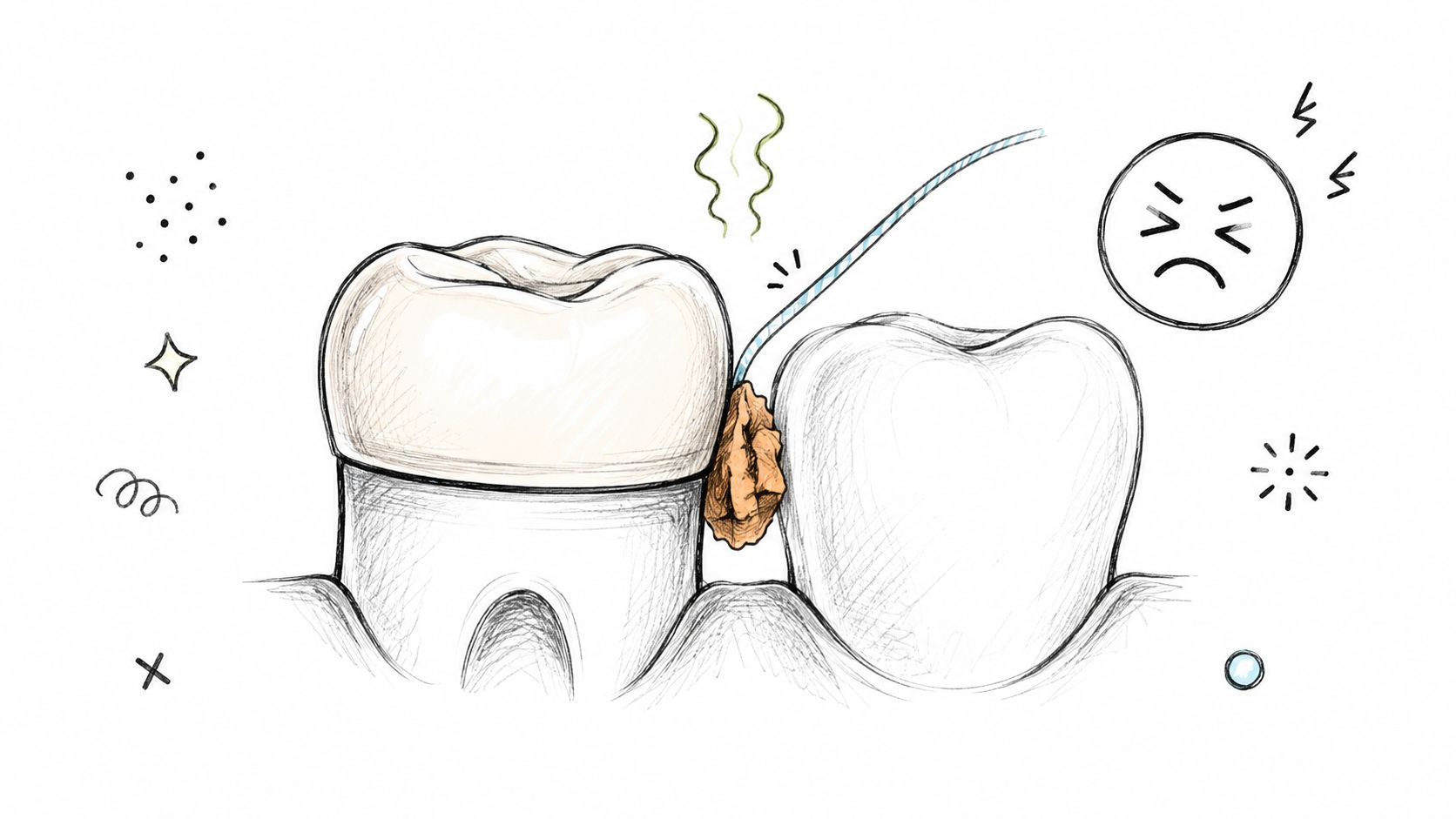
Food trapping is one of those symptoms patients can feel every day. If you're constantly cleaning the same area and it still doesn't feel clean, the crown probably needs a closer look.
Bad Crown Fit: 7-Symptom Comparison
| Symptom | 🔄 Implementation Complexity | ⚡ Resource & Response Speed | 📊 Expected Outcomes / ⭐ Effectiveness | Ideal Use Cases | 💡 Key Advantages |
|---|---|---|---|---|---|
| Persistent Tooth Pain and Sensitivity | Medium–High, diagnostic tests; may need root canal or crown replacement | ⚡ Radiographs + endo consult; urgent/same-day evaluation recommended | 📊 Pain relief likely if treated; effectiveness ⭐⭐⭐ (if timely) | New or worsening pain after crown placement; temperature sensitivity | 💡 Early detection prevents nerve damage and more invasive care |
| Visible Gaps Between Crown and Gum Line | High, usually requires crown remake and possible periodontal care | ⚡ Digital impressions, lab fabrication; replacement timeline ~1–2 weeks | 📊 Eliminates decay pockets and improves prognosis; effectiveness ⭐⭐⭐ | Visible margin gap, food trapping, or bleeding at margin | 💡 Easily noticed by patient; correcting prevents advanced decay |
| Gum Inflammation, Swelling, and Bleeding | Medium, periodontal therapy plus possible crown adjustment/replacement | ⚡ Periodontal treatment + antimicrobial measures; improvement over weeks | 📊 Tissue health improves with combined care; effectiveness ⭐⭐⭐ | Localized swelling/bleeding around crowned tooth | 💡 Visible warning sign; often reversible if addressed early |
| Crown Feels High or Creates Uneven Bite | Low–Medium, occlusal adjustments typically effective; may need repeat visits | ⚡ Minimal instruments (articulating paper); often same-day adjustments | 📊 Bite balance and comfort restored; effectiveness ⭐⭐⭐ (when early) | Patient reports "high" bite, jaw pain, or new headaches | 💡 Often correctable quickly; prevents TMD and accelerated wear |
| Crown Feels Loose or Mobile | Medium, re-cementation or remake; assess underlying tooth structure | ⚡ Urgent dental visit; X‑rays and possible lab work; sometimes re-cement same day | 📊 Retention restored if tooth sound; effectiveness ⭐⭐–⭐⭐⭐ (variable) | Palpable movement, recurring dislodgement, foul taste/odor | 💡 Readily detected by patient; prompt care reduces infection risk |
| Visible Dark Line or Discoloration at Crown Margin | Medium, may be cosmetic crown replacement or treatment for decay | ⚡ Imaging + cosmetic/all‑ceramic crown work; moderate timeline | 📊 Aesthetics and margin health improved; effectiveness ⭐⭐⭐ (cosmetic) | Dark/gray line at gum junction, especially in smile zone | 💡 Clear visual cue prompting evaluation for decay vs esthetic fix |
| Frequent Food Trapping and Difficulty Cleaning | Medium, contour/contact correction or crown replacement | ⚡ Hygiene aids (Waterpik) + possible remake; improvement varies with intervention | 📊 Reduces decay/gum risk after correction; effectiveness ⭐⭐⭐ | Chronic food impaction despite good home care | 💡 Immediate quality‑of‑life improvement; motivates timely correction |
Your Next Steps for a Healthy, Comfortable Crown
Ignoring a crown symptom rarely makes it go away. Pain can turn into bite problems, a small gap can become a decay point, and irritated gums can keep reacting until the restoration is adjusted or replaced. The earlier a crown fit problem is examined, the more options you usually have, and the less likely you are to need more involved treatment later.
If your crown has one or more of these signs, don't keep waiting for it to “settle in.” A healthy crown should feel stable, comfortable, and easy to clean. If it doesn't, that's a reason to be seen, not a reason to tough it out.
At All Stars Dental, Dr. Tran and our team evaluate crown fit with comfort, function, and long-term health in mind. We serve adults and families across central Houston, including Montrose, Midtown, and the Heights, with restorative care, periodontal treatment, TMD evaluation, and crown solutions designed to work the way your bite does. If your crown feels high, loose, sore, or hard to clean, schedule an exam before the problem grows.
If your crown feels wrong, the next step is a professional evaluation, not guesswork. All Stars Dental offers crown assessments, restorative treatment, gum care, and bite evaluations for patients who want a comfortable result that lasts. Call or book online if you're dealing with pain, looseness, or food trapping, and let Dr. Tran's team help you get the restoration back on track.
- Chipped Dental Crown: Immediate Steps and Repair Options
- How Much Do Veneers Cost? 2026 Pricing Guide
- Toothache Relief in Houston: A Gentle Guide to Immediate and Lasting Comfort
- Air Abrasion Dentistry Houston: The Painless, Drill-Free Way to Treat Cavities in 2026
- Porcelain Veneers Houston: Your 2026 Guide to a Natural, Confident Smile
- Veneers vs. Crowns in Houston: Your Ideal Smile in 2026
- Affordable Full Mouth Reconstruction in Houston: Your 2026 Guide to Restoring Your Smile