
How Much Do Veneers Cost? 2026 Pricing Guide
How much do veneers cost? In the United States, a single veneer averages about $1,765, with a reported range of $500 to $2,895 per tooth. A 6 to 8 tooth smile case averages $15,486 before any prep work, temporaries, gum reshaping, or maintenance are added, and that's why the budget conversation starts with more than one number.
Table of Contents
- What Veneers Cost on Average in the United States
- Porcelain vs Composite vs No-Prep Veneers
- Hidden Line Items That Change the Final Bill
- How the Treatment Timeline Works and What Each Visit Costs
- Lifetime Value and Long-Term Cost Considerations
- Houston-Specific Pricing and What Affects Your Quote
- Insurance, Financing, and How to Make Veneers Affordable
- Your Next Step Toward a Confident Smile
What Veneers Cost on Average in the United States
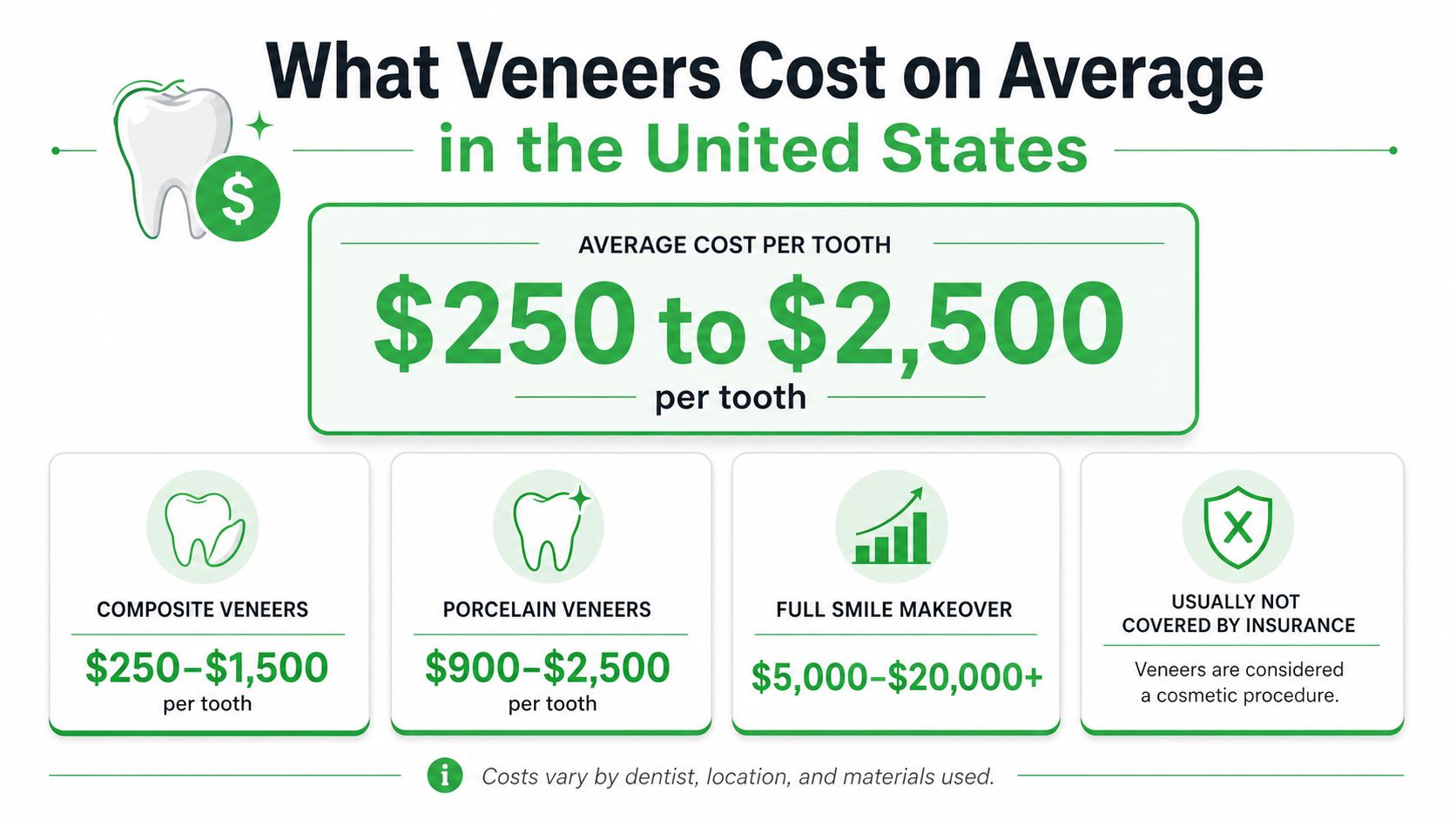
The cleanest national baseline is this, one veneer commonly averages $1,765, with a cost range of $500 to $2,895 per tooth. A full set of six to eight veneers averages $15,486, which is why even a small smile makeover can move quickly into the mid-five-figure range once you cover the front teeth people see, plus the supporting work behind them. Those figures come from a U.S. cost roundup that reflects how veneer pricing scales with treatment size and case complexity. CareCredit's veneer cost guide gives a useful anchor for that national average and range.
Why the total rises so fast
Veneers are priced per tooth, not as one flat smile package. That means the quote changes every time you change the number of visible teeth, the material, or the amount of customization.
A patient who only needs one chipped front tooth fixed may be looking at a very different budget from someone replacing six to eight teeth across the smile zone. The math is simple, but the real-world effect is easy to miss, because cosmetic dentistry often sounds like a single treatment even when it's really several coordinated steps.
Practical rule: If a quote sounds low, ask whether it includes only the veneers themselves or the full case from planning to final bonding.
The national average also helps explain why dentists talk about veneers as a premium elective service. A single restoration can already land in four figures, and once you multiply that across a visible smile, the number expands fast. That's the mindset shift many patients need before comparing material choices or local quotes.
Porcelain vs Composite vs No-Prep Veneers
The biggest price difference usually starts with the material. Across major U.S. pricing guides, porcelain veneers generally sit around $900 to $2,500 per tooth, while composite veneers are usually lower at about $250 to $1,500 per tooth. Smilepedia's cost guide reflects that split clearly, and it matches the way most patients hear the options explained in a consultation.
The three choices in plain language
Porcelain is the lab-made option. The dentist prepares the tooth, sends the case to a ceramist, and bonds back a shell that's designed for a highly polished, natural look. It costs more because the process is more customized and the material is the premium tier.
Composite is the chairside option. The dentist builds the shape directly on the tooth with resin, which usually makes it faster and less expensive. It's a useful option when the goal is to improve shape or color without committing to a more involved lab workflow.
No-prep alternatives are more conservative because they involve little to no enamel removal. They're attractive to patients who want a lower-commitment approach, especially when the goal is to improve appearance without a major change to the tooth structure.
A useful way to compare them is by the kind of visit you're paying for. Porcelain usually means planning, lab work, and multiple appointments. Composite is often more immediate. No-prep sits between the two in terms of invasiveness, but not always in terms of price.
| Veneer Material Comparison | Per-Tooth Range | Typical Lifespan | Visit Style |
|---|---|---|---|
| Porcelain | $900 to $2,500 | Longer-lasting, with lab-fabricated durability | Usually multiple visits |
| Composite | $250 to $1,500 | Shorter-lasting than porcelain | Often chairside, sometimes same-day |
| No-prep | Varies by case | Depends on material and wear | Conservative, enamel-sparing |
If you want a deeper technical overview of porcelain treatment, this porcelain veneer guide is a solid reference point for how the material is commonly used.
Hidden Line Items That Change the Final Bill
The number on the quote is rarely just the shell on the tooth. Prep and finishing work can change the final cost substantially because veneers depend on the teeth and gums around them looking balanced, healthy, and symmetrical.
Common add-ons patients often miss
Diagnostic wax-ups and mock-ups are planning tools. They help the dentist show what the smile may look like before any tooth is touched, and they can be especially important when multiple front teeth are being changed at once.
Gum contouring may be added when the gum line sits unevenly or covers too much of the tooth. That extra soft-tissue work can improve the final shape of the smile, but it also adds a separate procedure to the budget.
Whitening is often used on the teeth that won't receive veneers so the surrounding smile matches the new restorations. If you're thinking about preserving brightness later, this guide on how to whiten veneers at home is useful for understanding what's safe and what isn't after treatment.
Temporaries matter, too. When the final veneers are being made, patients may wear provisional restorations that protect the teeth and preview the shape. Those temporaries take time to make, fit, and adjust.
Other items can include occlusal adjustments to refine the bite, plus sedation or anesthesia if a patient needs extra comfort during a longer appointment. The lesson is simple, a veneer quote can include the visible smile, but it often also reflects the invisible setup required to make that result last.
A careful estimate should tell you what's included before you agree to treatment, because the supporting work can change the total as much as the veneers themselves.
How the Treatment Timeline Works and What Each Visit Costs
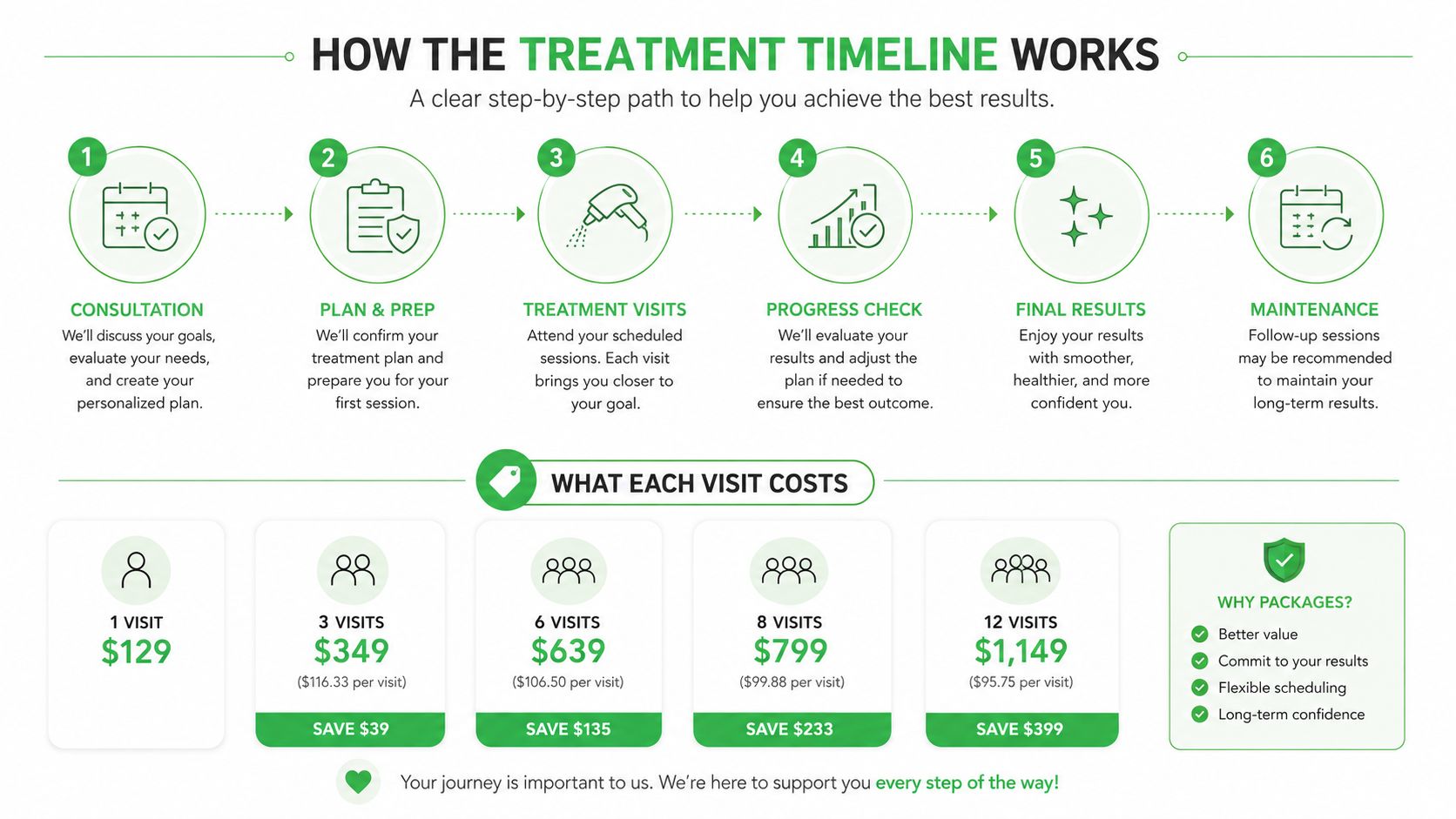
Veneers are usually a multi-visit process, and that matters because each appointment does a different job. A consultation is not the same as tooth preparation, and the final bonding visit is not the same as the lab stage that happens in between.
The usual sequence
The first visit is the consultation and planning appointment. The dentist evaluates the bite, talks through goals, and decides whether porcelain, composite, or a no-prep approach fits the smile.
The next visit often involves tooth preparation and impressions or scans. If porcelain is chosen, this is also where the lab workflow begins, which is one reason the price is higher than a chairside composite case.
A later appointment usually covers the temporaries if they're part of the case. That step protects the teeth and gives the patient a preview of the final shape while the permanent restorations are being made.
The final visit is bonding and adjustment. The dentist checks the fit, reviews bite contacts, and cements the restorations in place. A follow-up may be needed for bite refinements or small comfort tweaks.
If you want the procedural version of that timeline, this step-by-step porcelain veneer guide lays out the sequence in more detail.
What usually costs the most
The highest-cost part is often the restoration itself, because that's where the lab or chairside fabrication happens. Planning, temporaries, and final bonding are important, but the material and fabrication method usually drive the bigger share of the quote.
That's why two patients can both say they are getting veneers and still receive very different estimates. One may need a straightforward cosmetic update, while the other needs a longer workflow with more customization and more visits.
Lifetime Value and Long-Term Cost Considerations
Upfront price matters, but so does how long the result holds up. A cheaper veneer that needs more repair work, staining management, or replacement can cost more over time than a higher-priced restoration that stays stable longer.
Thinking beyond the first bill
Composite often looks attractive because the starting cost is lower. That makes sense for someone who wants a smaller initial investment or prefers a more reversible-feeling first step.
Porcelain usually asks for more money up front, but it's the option many patients choose when they want a more durable, polished, and stain-resistant result. The key question is not just, “What do veneers cost today?” It's also, “What will I be paying for again later?”
Emerging options complicate the picture further. Recent pricing guides point to no-prep sets starting around $3,520 and 3D-printed resin veneers as low as $550 to $1,250 per tooth in some 2025 to 2026 coverage, which shows the market is moving toward faster and lower-cost workflows. Those newer categories may fit certain patients well, but they're best judged by how often they need touch-ups, repairs, or replacement rather than by the sticker price alone.
Simple way to think about it: lower upfront cost can mean more maintenance later, while higher upfront cost can mean fewer surprises over time.
For a deeper look at long-term durability, this guide on how long porcelain veneers last is the right place to compare maintenance expectations.
Houston-Specific Pricing and What Affects Your Quote
Houston pricing usually tracks the national veneer market, but the final quote still depends on the practice, the case, and the amount of customization involved. In a central Houston office, a patient should expect the same basic pricing logic as elsewhere, then ask how local overhead, lab choice, and case complexity are affecting the estimate.
What can move a Houston quote up or down
A more experienced cosmetic dentist may charge more because the planning is more detailed and the aesthetic work is more exacting. A practice that uses an outside ceramist may also price differently from one with a different lab workflow.
The number of teeth matters, but so does the kind of smile being designed. A minimal correction on two teeth is a different job from a full front-tooth redesign, even if both patients say they want veneers.
Neighborhood economics play a role too. Central Houston offices often carry different overhead than suburban practices, and that can show up in the final fee structure.
Before committing, ask for these specifics:
- An itemized treatment plan so you can see what each part of the case costs.
- Before-and-after photos of similar smiles, not just the practice's best gallery picks.
- Lab details if the veneers are being fabricated outside the office.
- Clear scope on whether the quoted number includes planning, temporaries, and follow-up.
That level of clarity matters more than a glossy sales pitch. A good estimate tells you exactly what the office is doing, what the lab is doing, and what you're paying for at each step.
Insurance, Financing, and How to Make Veneers Affordable
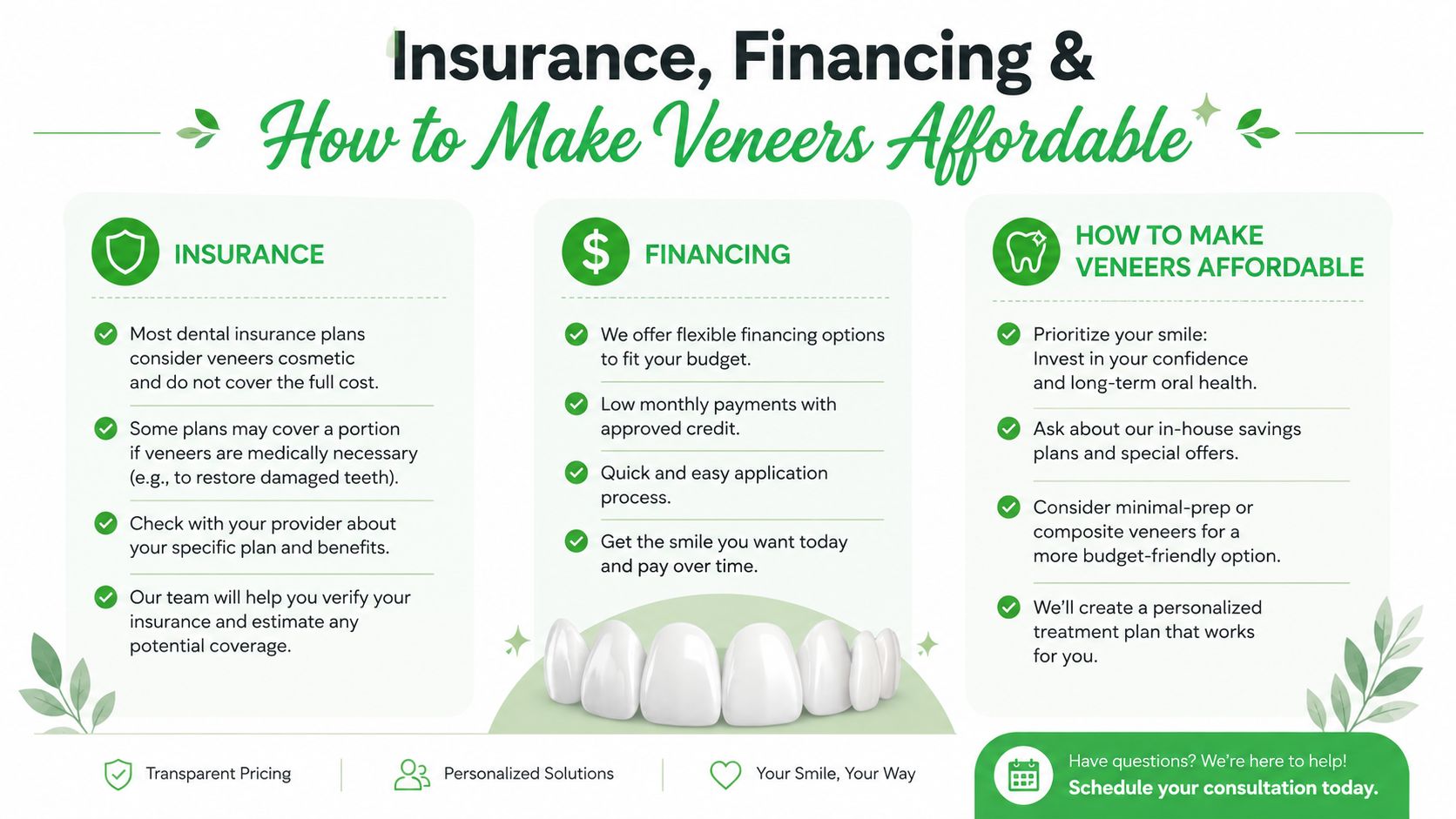
Veneers are usually treated as elective cosmetic work, so insurance often doesn't cover them. That can be frustrating, but it also means the budgeting conversation should happen early, before any tooth is prepared.
The budget tools that actually help
Financing is the most common way patients spread out the cost. A plan that breaks the treatment into monthly payments can make a cosmetic case easier to fit into real life, especially when the final estimate includes prep work and supporting procedures.
A written quote helps more than a verbal estimate because it lets you compare offices without guessing what's included. That's especially useful for elective care, where every added step affects the total.
For readers comparing benefit design more broadly, this family health insurance in Florida resource is a good reminder that dental coverage often works differently from medical coverage, so it pays to check the fine print before assuming anything is included.
If you're trying to make veneers more manageable, start with three questions. What is included, what is excluded, and what financing terms are available before treatment begins? That's the fastest way to avoid surprise charges and keep the smile plan realistic.
Your Next Step Toward a Confident Smile
A veneer quote usually becomes easier to understand once you split it into material, number of teeth, and supporting work. A single per-tooth price only tells part of the story. Prep work, temporaries, gum reshaping, and follow-up care can all change the total, which is why a realistic budget starts with the full treatment plan, not one headline number.
A patient comparing Houston offices should ask for two or three written quotes, then review them line by line. The best comparisons include itemized fees, similar before-and-after cases, and a plain explanation of whether the plan includes prep, temporaries, gum work, and follow-up. If one office quotes only the veneers and another includes the supporting steps, those two numbers are not the same thing.
The easiest way to avoid confusion is to ask what the fee covers. A smaller case with minimal prep and no extra tissue work will usually sit at the lower end of the range, while a more involved smile redesign can rise once the dentist adds supporting procedures. That difference matters because veneers are a cosmetic investment, but the final bill often reflects the health and shape of the teeth and gums that support them.
The best consultation is the one where nothing is hidden. If the office explains the full plan in plain language, you can decide whether the case is a small cosmetic adjustment or a larger smile transformation that deserves a bigger budget. For a practical estimate, a clear explanation of what is included, and a plan you can budget for, the team at All Stars Dental is ready to start the conversation.
- What Are Veneers: A Clear Guide to a Lasting Smile
- 7 Bad Fitting Crown Symptoms and What to Do Next
- Toothache Relief in Houston: A Gentle Guide to Immediate and Lasting Comfort
- Air Abrasion Dentistry Houston: The Painless, Drill-Free Way to Treat Cavities in 2026
- Porcelain Veneers Houston: Your 2026 Guide to a Natural, Confident Smile
- Veneers vs. Crowns in Houston: Your Ideal Smile in 2026
- Affordable Full Mouth Reconstruction in Houston: Your 2026 Guide to Restoring Your Smile