
What’s a Crown in Dentistry? Your Complete 2026 Guide to Restorative Care
You have likely spent several days nursing a sensitive tooth, wondering if that small crack will eventually lead to a bigger problem. It is a stressful position to be in, especially when you aren’t sure which treatment is right for you or if the process will be painful. One of the most common things patients ask us is, what’s a crown in dentistry and why do I need one? We know that dental anxiety is real, and we’re here to help you move from a place of concern to one of total clarity.
In this guide, we promise to demystify the entire restorative process so you can feel empowered about your oral health. We’ll walk you through how a dental crown serves as a protective shield for your natural tooth, the different materials available in 2026 like durable zirconia, and how modern techniques ensure a gentle, unhurried experience. You’ll discover how we combine professional expertise with a warm, person-centered approach to help you achieve a healthy, confident smile without the fear of the unknown. By understanding each step of the journey, you can move forward with peace of mind and a restored sense of well-being.
Key Takeaways
- Discover what’s a crown in dentistry and how this custom-fitted restoration acts as a protective shield to preserve your natural tooth structure.
- Identify the common signs that your smile needs support, from preventing fractures in weak teeth to restoring the strength of a chipped or worn tooth.
- Learn how to choose the ideal material for your specific needs, balancing the incredible durability of zirconia with the lifelike appearance of porcelain.
- Gain peace of mind by walking through our gentle, unhurried procedure designed to replace dental anxiety with a sense of calm and security.
- Explore simple yet effective care strategies to protect your investment and keep your restorative work healthy for 15 years or more.
What Is a Dental Crown? Defining the ‘Cap’ for Your Tooth
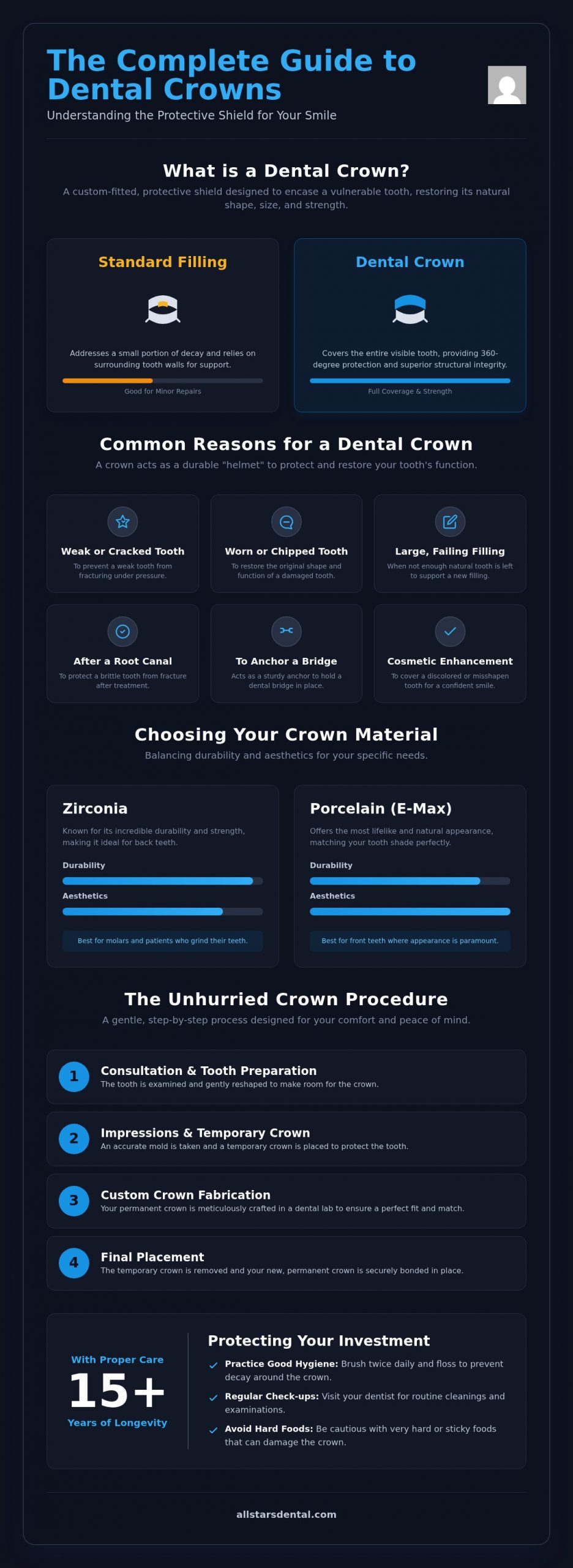
When you first hear your dentist recommend a restoration, you might feel a flicker of uncertainty or even a bit of anxiety. You might find yourself wondering, what’s a crown in dentistry, and how does it differ from the treatments you’ve had in the past? At its core, a dental crown is a custom-fitted, protective shield designed to encase a vulnerable tooth. While a standard filling addresses a small portion of decay, a crown covers the entire visible area above the gum line. This 360-degree coverage is vital because it restores the tooth’s natural shape, size, and strength. It allows you to eat, speak, and smile with total confidence again, knowing your tooth is secure.
Think of the crown as a durable “cap” that reinforces your tooth against the daily pressures of biting and chewing. It’s a person-centered solution that prioritizes your comfort while ensuring the long-term health of your smile. Unlike other treatments that only patch a hole, a crown provides a comprehensive barrier against further damage. This restorative approach doesn’t just fix a problem; it offers a fresh start for a tooth that might otherwise be at risk of being lost. Our goal is always to move you from a state of concern to a final state of resolution and clarity.
The Difference Between a Crown and a Filling
Sometimes a standard filling isn’t enough to keep a tooth stable. Fillings are excellent for minor repairs, but they rely on the surrounding tooth walls for support. If the remaining structure is too thin, a filling can actually create a “wedge effect.” This happens when the pressure of chewing forces the filling against the weakened walls, potentially causing a deep fracture. A Crown (dental restoration) provides superior structural integrity compared to composite resin. By wrapping around the tooth, it holds the pieces together and prevents further damage. It acts as a durable helmet, ensuring that the force of your bite is distributed evenly across the entire surface.
Anatomical vs. Prosthetic Crowns
It helps to understand that you already have crowns in your mouth. The part of the tooth you see when you smile is biologically known as the anatomical crown. When that natural enamel becomes compromised by wear, injury, or decay, we use a prosthetic crown to mimic its natural function and beauty. As your “Gentle Expert,” we take great care to ensure your new restoration feels like a natural part of you. This includes a meticulous process of matching the prosthetic to your unique tooth shade. We want you to feel enlightened by the process, knowing that your new crown is crafted to blend seamlessly with your natural anatomy. You aren’t just getting a dental device; you’re receiving a carefully designed replacement that honors your smile’s original character.
Why Do I Need a Crown? Common Signs for a Chipped Tooth Crown
Understanding what’s a crown in dentistry is often the first step toward resolving a persistent dental worry. You might have noticed a slight sensitivity when drinking cold water or perhaps a dull ache when you bite down. These are often the body’s ways of signaling that a tooth is under stress. Prevention is a cornerstone of our philosophy at All Stars Dental. By placing a crown on a weak tooth before it actually breaks, we’re acting as a proactive partner in your oral health. This protective measure prevents the need for more complex treatments later and ensures you don’t experience the sudden, sharp pain of a tooth fracture during a meal.
When a tooth has already suffered damage, such as being severely worn down from grinding or having a large, old filling that’s starting to fail, a crown restores its original function. In many of these cases, there simply isn’t enough healthy enamel left to support a new filling. This is where Dental Crowns provide the necessary reinforcement to keep the tooth intact. Additionally, crowns are essential for holding a dental bridge in place. They act as sturdy anchors for the artificial tooth that fills a gap, ensuring your bite remains balanced and your other teeth don’t shift out of alignment over time.
Crowns After a Root Canal
A tooth that has undergone root canal therapy often requires extra protection to stay healthy. Because the procedure involves removing the infected pulp, the tooth can naturally become more brittle as the years go by. You can think of the crown as the final, reassuring step in your healing journey. We often discuss this integration in our guide on Everything You Need to Know About Root Canals in Houston. The crown seals the tooth against bacteria and restores its structural strength, allowing you to chew with total peace of mind.
Cosmetic and Functional Restorations
Beyond structural repairs, crowns offer a beautiful path to a more confident smile. They can effectively cover misshapen or severely discolored teeth that might not respond to traditional whitening treatments. For those exploring permanent tooth replacement, crowns also serve as the visible, lifelike “tooth” that sits on top of a dental implant. The emotional relief of having a fully functional, attractive bite again is immense. It transforms the way you interact with the world, moving you from a state of self-consciousness to one of total security. If you are feeling unsure about which path is right for you, we invite you to start a gentle conversation with our team to explore your options in a relaxed environment.
Teeth Crowns: Comparing Materials for Your Houston Smile
Choosing the right material for your restoration is a collaborative process that we approach with patience and transparency. We want you to feel enlightened and secure in your decision, knowing that the material we select together will serve your unique lifestyle and health needs. When you’re exploring what’s a crown in dentistry, it’s helpful to realize that the “best” material depends heavily on where the tooth is located and how much pressure it handles. We focus on biocompatibility, ensuring that whatever we place in your mouth promotes healthy gum tissue and feels like a natural extension of your body.
Many patients feel a sense of hesitation regarding the final appearance of their restoration. You might worry that a crown will look obvious or “fake” compared to your other teeth. Our unhurried diagnostic process includes a detailed shade-matching session where we use natural light to ensure a perfect blend. According to information on crowns from the ADA, the goal is to restore function while maintaining a natural look. This meticulous attention to detail helps dismantle the typical anxieties associated with restorative care, leaving you with a result that is both strong and beautiful.
Porcelain and Ceramic Crowns
For teeth that are visible when you smile, all-porcelain or ceramic materials are often the gold standard. These materials are prized for their lifelike translucency, which allows light to pass through them just like natural enamel. We often compare these materials to those used in other cosmetic treatments; you can learn more about this in our guide on How Long Do Porcelain Veneers Last? for a deeper look at material durability. Modern ceramic crowns are incredibly resilient, with some expected to last between 12 and 20 years when supported by diligent home care and regular check-ups.
Zirconia and Metal Alloys
When we move to the back of the mouth, durability becomes the primary focus. Zirconia has become a leading choice in 2026 because it offers extreme strength for heavy biters while showing significant improvements in translucency. It’s a fantastic option for molars that endure the most force during chewing. In some cases, we might discuss gold or silver alloys, which remain some of the most long-lasting options available. We also offer Porcelain-Fused-to-Metal (PFM) hybrids. These provide a sturdy metal substructure for strength with a porcelain exterior for a more natural appearance. Our role is to guide you through these choices, ensuring you feel relaxed and confident in the path we choose for your restored smile.
The Dental Crown Procedure: A Gentle, Unhurried Journey
Embarking on a restorative treatment shouldn’t feel like a rush toward a finish line. Instead, we view the process as a guided journey where your comfort is the priority at every turn. Many patients ask us, what’s a crown in dentistry, not just to understand the device itself, but to visualize the time they will spend in the chair. Our approach is methodical and transparent, ensuring you move from an initial state of concern to a final state of resolution and clarity. We take the time to explain each movement, so you always feel informed and relaxed.
The journey begins with a quiet, conversational diagnostic phase. Dr. Tran performs a thorough examination to ensure a crown is the most appropriate path for your health. Once we move into the preparation stage, we use gentle local anesthesia to create a completely painless environment. We then carefully shape the tooth to create a stable foundation for the restoration. Precise impressions are taken to ensure a custom fit that feels natural within your bite. While your permanent restoration is being meticulously crafted, we place a temporary crown to act as a protective shield for your tooth. Finally, we invite you back for the fitting, where we ensure the margins are perfect and you feel enlightened about your restored smile.
Addressing Dental Anxiety During the Procedure
We understand that the sounds and sensations of a dental office can be a source of stress. Dr. Tran’s “Gentle Expert” persona is designed to dismantle these fears through patience and the use of modern technology. We prioritize a person-centered environment where your emotional well-being is as important as the technical success of the crown. For example, our use of Air Abrasion Dentistry reflects our commitment to drill-free, minimally invasive care whenever possible. This tech-forward approach reduces discomfort and helps you maintain a sense of calm and security throughout your visit.
Temporary vs. Permanent Crowns
Your temporary crown is a vital placeholder that keeps your tooth stable for about two weeks. It’s important to treat this restoration with a bit of extra care; we recommend avoiding particularly sticky or hard foods that might dislodge it. When you return for the permanent reveal, the excitement of seeing your restored smile is a highlight for our team. We provide “real-time” support as we bond the final piece, checking that every contact point feels exactly right. If you’re ready to experience a more supportive approach to restorative care, we invite you to schedule an unhurried consultation with our Houston team today.
Longevity and Care: Protecting Your Investment in Houston
Completing your restorative treatment is a significant milestone for your oral health and your overall well-being. Now that you have a clear answer to what’s a crown in dentistry and have experienced the transformation firsthand, the focus shifts to preservation. A well-crafted crown is designed to be a long-term solution, often lasting 15 years or more when supported by diligent care. We view this phase as a partnership where we provide the professional oversight and you provide the daily attention your new smile deserves. This commitment ensures your investment remains a source of confidence and comfort for a decade and beyond.
One of the most critical aspects of crown longevity is monitoring the “margin,” which is the precise line where the restoration meets your natural tooth. This area requires a gentle touch and regular professional observation at our Houston clinic. During your check-ups, we carefully examine this boundary to ensure it remains sealed against bacteria. We also suggest being mindful of your diet to prevent structural damage. While your crown is incredibly strong, avoiding habits like chewing on ice, hard candy, or non-food objects will prevent the porcelain from chipping. By making these small adjustments, you protect the integrity of the restoration and the health of the tooth beneath it.
Daily Hygiene for Your Crowned Tooth
Maintaining a crown doesn’t require complex tools, but it does require a methodical approach. We recommend using a non-abrasive toothpaste to preserve the luster of the porcelain and prevent micro-scratches on the surface. When flossing, try to slide the floss out sideways rather than pulling it upward, which helps keep the restoration secure. If you ever notice a change in how your bite feels or if the gum tissue around the crown becomes sensitive, it may be a sign that a small adjustment is needed. These unhurried professional cleanings and minor tweaks are essential steps in your guided journey toward lasting oral health.
Why Houston Patients Trust All Stars Dental
Choosing an experienced partner for your restorative care makes a profound difference in the success of your treatment. Dr. Tran has spent over 15 years building a foundation of trust with the Houston community, focusing on a person-centered approach that prioritizes your peace of mind. We believe in total transparency, ensuring every question is answered with kindness and every procedure is explained in everyday terms. Our unhurried pace at our Waugh Drive office allows us to focus entirely on your growth and comfort. If you are ready to restore your smile in a supportive, gentle environment, we invite you to take the next step. Schedule your restorative consultation with Dr. Tran today and begin your journey toward a healthy, enlightened smile.
Step Toward a Healthier, Confident Smile
Your journey toward a restored smile doesn’t have to be defined by uncertainty or stress. By exploring what’s a crown in dentistry, you’ve taken a proactive step toward preserving your natural teeth and reclaiming your daily comfort. We’ve seen how these custom-fitted shields provide 360-degree protection, whether you’re reinforcing a tooth after a root canal or choosing durable zirconia for long-term strength. Every step of this process is designed to be unhurried and transparent, ensuring you feel enlightened and secure at every turn.
At All Stars Dental, Dr. Tran brings over 15 years of patient trust and excellence to every restorative procedure. We prioritize a gentle, empathetic environment where your emotional well-being is just as important as your technical outcome. You aren’t just another number in a system; you’re a partner in a guided journey toward better health. If you’re ready to move forward with clarity and confidence, we’re here to lead the way with kindness and expertise. Our team is dedicated to making sure you feel seen and cared for throughout your visit.
Restore your smile with a gentle touch at All Stars Dental. We look forward to helping you smile with total peace of mind again.
Frequently Asked Questions
Is getting a dental crown painful?
The procedure is not painful because we use gentle local anesthesia to ensure you remain completely relaxed and comfortable throughout the visit. Dr. Tran prioritizes your emotional well-being, creating a soothing environment where you feel seen and cared for. Most patients report feeling only light pressure during the preparation phase. Our goal is to transform a potentially stressful experience into one of calm and security.
How long does the dental crown procedure take?
The entire process typically requires two separate visits to our Houston office to ensure the highest quality. Your first appointment for preparation and impressions usually takes about 60 to 90 minutes in an unhurried environment. The second visit for the final fitting is shorter, often lasting 30 to 45 minutes. This methodical pacing prevents you from feeling rushed and allows for total comprehension of each step.
Can a crown fall off, and what should I do?
While it is rare, a crown can occasionally dislodge if the dental cement fails or if new decay forms at the margin. If this happens, please keep the restoration safe and call our office immediately to schedule a priority visit. Don’t attempt to glue it back yourself with household adhesives. We’ll examine the tooth and the crown to determine if it can be safely rebonded or if a new one is needed.
What is the average cost of a dental crown in Houston?
The cost of a dental crown in Houston depends on several factors, including the material chosen and your specific insurance benefits. Most dental insurance plans categorize crowns as major restorative care and typically cover approximately 50% of the cost after your deductible is met. We provide a transparent, person-centered treatment plan during your consultation so you feel informed and enlightened about your investment before we begin.
Do I really need a crown after a root canal?
Yes, a crown is usually essential to protect a tooth after a root canal because the procedure can leave the remaining structure brittle. Understanding what’s a crown in dentistry helps you see it as a protective shield that prevents the tooth from fracturing under biting pressure. This final step in your healing journey ensures that the tooth remains functional and secure for many years to come.
What’s the difference between a crown and a bridge?
A crown is designed to cover and protect a single natural tooth, while a bridge is used to fill a gap left by one or more missing teeth. A bridge consists of two crowns placed on the healthy teeth on either side of the space, which then support a floating artificial tooth in the middle. Both restorations are custom-fitted to ensure your bite feels natural and your smile looks seamless.
How do I know if my chipped tooth needs a crown or just a filling?
Fillings are generally used for minor chips where only a small amount of enamel is missing. If the fracture is deep or affects the structural integrity of the tooth, a crown is the better choice because it provides 360-degree protection. During your diagnostic conversation, we’ll use clear imagery to show you the extent of the damage. This transparency helps you feel confident in choosing the restoration that best supports your long-term health.
Can I get a crown on the same day?
We focus on providing precision-crafted permanent crowns that are custom-made in a specialized dental laboratory for the best fit and durability. While some clinics offer same-day options, we believe the traditional two-visit process allows for superior shade matching and structural strength. You’ll wear a natural-looking temporary crown while your permanent one is being created. This unhurried approach ensures your final result is a beautiful, long-lasting restoration you can trust.
- Affordable Full Mouth Reconstruction in Houston: Your 2026 Guide to Restoring Your Smile
- The Best Dental Implants of 2026: A Patient’s Guide to Quality and Longevity
- Root Canal Recovery: A Step-by-Step Guide to Gentle Healing in Houston
- Air Abrasion Dentistry: The Painless, Drill-Free Way to Treat Cavities in 2026
- Periodontitis Treatment in Houston: A Gentle Guide to Saving Your Smile in 2026
- Smile Makeover Houston: The 2026 Guide to Your Custom Cosmetic Transformation
- Same-Day Dentures vs. Traditional Dentures in Houston: Which Is Right for You?