
Root Canal Recovery: A Step-by-Step Guide to Gentle Healing in Houston
What if the most stressful part of your dental visit isn’t the procedure itself, but the uncertainty you feel once you return home? It’s completely natural to feel a mix of relief and anxiety as you begin your root canal recovery. You want to ensure that every step you take supports the hard work done in the chair, yet questions about lingering numbness or the safety of your temporary filling can feel overwhelming. At All Stars Dental, we believe that healing should be a guided, transparent experience where you feel supported long after you leave our Houston office.
You’ll discover how to navigate the initial hours of healing with ease, from managing sensations to choosing the right foods that protect your investment. We’ll also explore why modern techniques lead to a success rate of up to 95% for these treatments, giving you total confidence that your natural tooth is saved. This guide provides a clear, step-by-step roadmap to help you move from post-operative caution to a life of pain-free, healthy smiles.
Key Takeaways
- Learn why waiting for local anesthesia to wear off completely is the essential “golden rule” for protecting your mouth immediately after the procedure.
- Discover a proactive schedule for managing discomfort that ensures your root canal recovery remains gentle and predictable from the very first hour.
- Identify which soft-food transitions support your healing process while keeping your temporary filling safe from damage or displacement.
- Gain the confidence to distinguish between normal post-operative tenderness and specific symptoms that require a quick call to your Houston dentist.
- Understand why a custom dental crown is the critical final step in restoring the long-term strength and structural integrity of your treated tooth.
Immediate Post-Treatment: Navigating the First Few Hours
The transition from the dental chair to your living room marks the true beginning of your root canal recovery. While the technical work is complete, your body is just starting its gentle healing process. It’s normal to feel a sense of relief mixed with a bit of a “heavy” sensation as the local anesthesia remains active. This lingering numbness is your body’s temporary shield, but it requires a mindful approach to avoid accidental injury to your soft tissues. Moving from the clinical environment of the office to the familiar comfort of home is an emotional shift; it’s a moment to let go of any tension you held during the visit and embrace the quiet rhythm of healing.
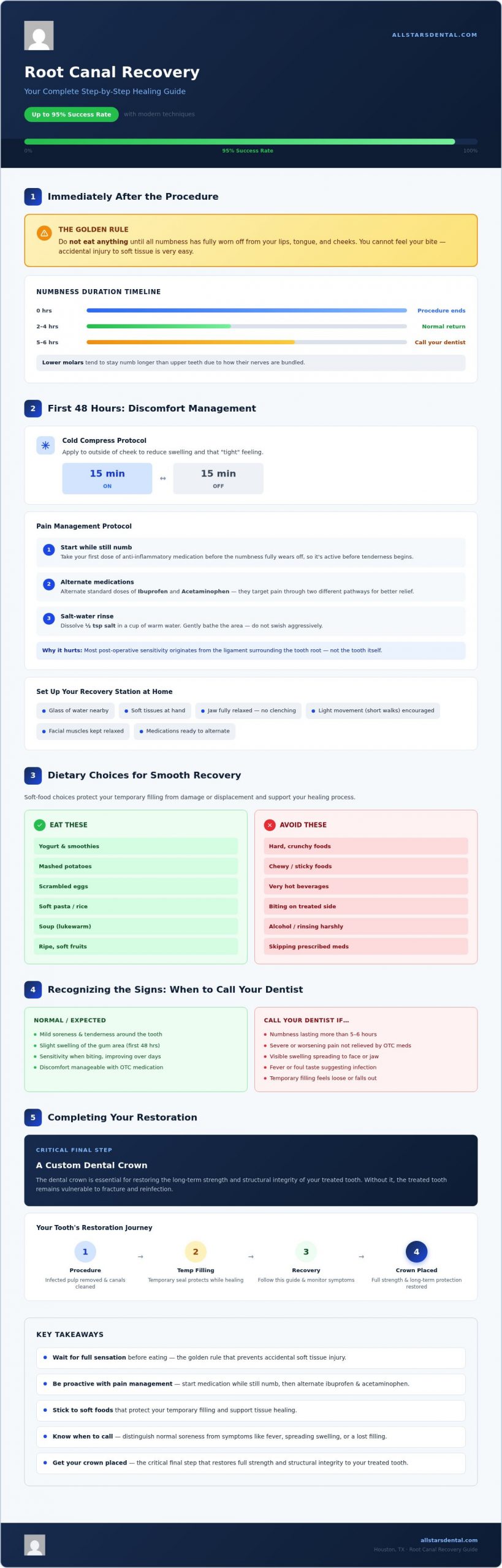
We often call the period immediately following your appointment the “waiting window.” The golden rule of this phase is simple: please refrain from eating until all sensation has returned to your lips, tongue, and cheeks. Because you cannot feel the pressure of your bite, it’s remarkably easy to accidentally chew on your inner cheek or tongue. This can lead to painful sores or swelling once the anesthetic wears off, which is the last thing you want during your first day of rest. Protecting these areas is your primary job while the medication is still doing its work.
Normal vs. Prolonged Numbness After Dental Work
Most patients in our Houston clinic find that sensation begins to return within two to four hours. This timeline varies based on your unique metabolism and the specific injection site used during your root canal treatment. If you’ve had work on a lower molar, you might notice the numbness lasts slightly longer than it would for an upper tooth because of how the nerves are bundled. Prolonged numbness is anything exceeding 5-6 hours post-procedure. While usually not a cause for alarm, reaching out to your dental team can help put your mind at ease and ensure everything is progressing exactly as it should.
Your First Steps When You Get Home
Once you arrive home, prioritize your comfort by creating a dedicated “recovery station.” Have a glass of water nearby and some soft tissues, as you might experience some minor drooling while your muscles are still relaxed. Your jaw has been working hard to stay open during the procedure, so give it permission to rest completely. Resting your jaw involves more than just not talking; try to keep your facial muscles relaxed and avoid clenching. If you’re curious about the technical steps that led to this point, you can review Everything You Need to Know About Root Canals in Houston to better understand the foundation of your healing. This quiet time is the perfect opportunity to transition from the focus of the clinic to the peace of your own space.
Managing Discomfort and Nurturing Your Smile: The First 48 Hours
The first two days after your procedure are a critical window for setting the tone of your healing. While you might expect a surge of discomfort as the anesthesia dissipates, a proactive approach can keep you feeling calm and comfortable. As the initial numbness fades, your primary focus shifts to a smooth root canal recovery. Many patients find that localized swelling is the most common concern during this time. Applying a cold compress to the outside of your cheek for 15 minutes on and 15 minutes off can significantly reduce this inflammation and prevent the “tight” feeling that often accompanies healing. Instead of staying completely stationary, try incorporating gentle movement like a light walk around your home. This helps maintain healthy circulation, which is vital for delivering the nutrients your body needs to repair the treated area.
A Step-by-Step Pain Management Protocol
Timing is everything when it comes to managing your comfort. Dr. Tran often recommends taking your first dose of anti-inflammatory medication while you’re still slightly numb. This allows the medicine to enter your system before any tenderness begins. According to the Cleveland Clinic, Root canal recovery is typically manageable with standard over-the-counter options that target inflammation directly. A common protocol involves alternating standard doses of ibuprofen and acetaminophen, as this combination targets pain from two different angles. This is particularly effective because most post-operative sensitivity comes from the ligament surrounding the tooth rather than the tooth itself. For an added layer of soothing care, you can perform a gentle salt-water rinse. Dissolve half a teaspoon of salt in a cup of warm water and let it bathe the area without swishing aggressively. It’s a simple step that keeps the site clean and reduces minor irritation.
The “Gentle Expert” Approach to Oral Hygiene
Maintaining a clean mouth is essential, but it requires a delicate touch near your new restoration. You should continue to brush your other teeth normally, but use a soft-bristled brush with light, circular motions around the treated tooth. Temporary fillings are often slightly softer than permanent ones, so avoiding direct, heavy pressure is key. When flossing, avoid the traditional “up and down” motion that might snag the edge of your temporary filling. Instead, slide the floss through the contact point and gently pull it out through the side. Our painless dentists in Houston educate every patient on these techniques because a stress-free recovery is just as important as the procedure itself. If you ever feel uncertain about your progress or have questions about your specific care plan, don’t hesitate to reach out to our friendly team for a quick check-in.
Dietary Choices for a Smooth Root Canal Recovery
Nourishing your body is a vital part of the healing journey, yet many patients feel a bit uncertain about what to eat during their root canal recovery. Think of your diet as a supportive partner to the clinical work performed by Dr. Tran. In the initial hours and days, your tooth and the surrounding tissues are in a state of quiet restoration, making them more sensitive to pressure and temperature. Choosing the right foods doesn’t just prevent discomfort; it protects the structural integrity of your temporary filling while your body works its magic. By being mindful of what you put on your plate, you can ensure that your healing remains on the right track without any unexpected setbacks.
Staying hydrated is essential, but it’s best to sip directly from a glass rather than using a straw. The suction created by a straw can sometimes cause unnecessary pressure or a pulling sensation in a sensitive area. Similarly, aim for room-temperature beverages and meals. Extreme heat or cold can trigger a sharp, temporary sensation in the treated tooth or the surrounding gums. Letting your coffee cool or your water sit for a few minutes ensures a much more pleasant experience as you navigate these early stages. This methodical approach to your daily routine helps transform a period of caution into a time of calm, predictable progress.
The Root Canal Recovery Food List
As you transition from a liquid-focused diet to soft solids, look for options that require minimal chewing effort. Houstonians often find comfort in local staples that fit these criteria perfectly. Consider these nutritious and gentle choices:
- Greek yogurt and cottage cheese: These are high in protein to support tissue repair.
- Mashed avocados: These provide healthy fats in a perfectly soft, creamy texture.
- Lukewarm broths and blended soups: These are warm and satisfying without the risk of heat sensitivity.
- Soft scrambled eggs and well-cooked grits: A classic, filling Houston breakfast that is incredibly gentle on your dental work.
Conversely, there are certain “red flag” foods that can jeopardize your progress. Please steer clear of popcorn, as the hulls can easily become trapped near the gumline and cause irritation. Nuts, ice cubes, and hard candies pose a risk of cracking the temporary restoration. Sticky treats like caramel or taffy are also off-limits, as they can pull the filling right out of place.
How to Chew Safely
The most effective way to protect your tooth is to consciously chew on the opposite side of your mouth for the first few days. This simple adjustment gives the treated area a total break from the mechanical stress of eating. As the initial tenderness subsides, you can gradually reintroduce more textures, moving from purees to soft-cooked vegetables. The temporary filling is the most vulnerable part of your tooth during this phase. By being mindful and patient with your dietary choices, you ensure that your root canal recovery leads directly to a successful, long-term restoration.
Recognizing the Signs: When to Contact Your Houston Dentist
Understanding the difference between the natural healing process and a situation that requires professional attention is a vital part of your root canal recovery. Most patients experience a bruise-like tenderness that gradually softens over several days. This is a sign that your body is successfully processing the inflammation. However, if you feel a sharp, throbbing pain that seems to intensify rather than diminish, it’s time to reach out. At All Stars Dental, we prioritize your peace of mind and want to ensure that every stage of your recovery feels secure and predictable. We encourage our Houston patients to trust their instincts; if something feels “off,” we’re here to listen and help.
One specific detail that requires attention is the feel of your bite. If the treated tooth feels “higher” than the others or if you can’t close your jaw comfortably, the temporary filling may need a slight adjustment. An uneven bite can put excessive pressure on the healing tissues and lead to unnecessary discomfort. Correcting this is a quick and simple process that can make a world of difference in how you feel. By addressing these small details early, we can prevent minor irritations from becoming larger concerns.
Red Flags That Require a Call to Dr. Tran
- Increasing Swelling: While some puffiness is normal in the first 48 hours, any swelling that begins or worsens after the second day should be evaluated.
- Allergic Reactions: If you develop a rash, hives, or difficulty breathing after taking new medications, seek help immediately.
- Lost Restorations: If your temporary filling or crown comes out completely, the interior of your tooth is exposed to bacteria and needs to be resealed promptly.
Normal Healing Milestones
Your root canal recovery follows a rhythmic timeline that most patients find very reassuring once they know what to expect. By the third day, the initial post-operative tenderness should begin to fade significantly. You’ll likely find that you need less over-the-counter support as the area settles. By the seventh day, most patients feel comfortable returning to a more varied diet, though we still recommend caution with very hard or sticky foods. If you ever notice a small, pimple-like bump on the gums near the treated tooth, don’t wait for your next appointment. This can be a sign of a persistent infection that needs a professional look. If you notice any of these signs or simply want the reassurance of an expert opinion, schedule a follow-up with our Houston team today.
Completing Your Restoration at All Stars Dental
While the root canal procedure effectively removes infection, it’s actually just the first half of your journey toward a healthy smile. Once the inner pulp is cleared, the remaining tooth structure becomes more delicate. Completing your root canal recovery means transitioning from that temporary filling to a permanent, high-quality restoration. Dr. Tran takes great care during this phase to ensure your final result feels as natural as your original tooth. This final step is what transforms a clinical success into a lifetime of functional comfort. You’ve already done the hard work of addressing the problem; now it’s time to secure the future of your smile.
The transition to a permanent restoration is a methodical process designed to give you peace of mind. We don’t just place a cap and send you on your way. Instead, we ensure the fit is precise and the bite is perfectly aligned. This attention to detail prevents future issues like jaw strain or uneven wear on your other teeth. By the time you leave our office with your final restoration, you’ll feel enlightened about your oral health and confident in the strength of your smile. It’s the resolution you’ve been working toward since your first visit.
The Role of Dental Crowns in Long-Term Success
A dental crown serves as a protective shield for your tooth. Because the tooth no longer has its internal blood supply after treatment, it can become brittle over time. Without a crown, the risk of a fracture increases significantly, especially on molars that handle heavy chewing pressure. Our porcelain crowns are custom-shaded to blend seamlessly with your existing teeth, ensuring your Houston smile remains bright and authentic. If your dental needs extend beyond a single tooth or involve multiple concerns, you might consider a full mouth reconstruction consultation to explore how we can restore your entire smile’s harmony and function.
A Lifetime of Healthy Smiles
Large-scale studies show that teeth restored with a high-quality crown have a long-term survival rate approaching 95-100%. This exceptional success rate is why we emphasize the importance of following through with your final appointment. Once your permanent crown is in place, your root canal recovery is officially complete. Maintaining this success requires the same simple care you give your other teeth: regular brushing, flossing, and routine check-ups at All Stars Dental. We’ll monitor the treated site during your regular cleanings to ensure the surrounding gums and bone remain healthy. You’re never just a number in our system; you’re a partner in your own oral health journey. Dr. Tran and our team remain dedicated to providing the “Gentle Expert” care you deserve, ensuring your experience is enlightened and stress-free from start to finish.
Embracing Your Restored Smile
Your journey toward a healthy, pain-free smile is almost complete. By moving thoughtfully through the initial hours of numbness and choosing gentle, supportive foods, you’ve already laid a strong foundation for your root canal recovery. True success lies in the transition from a temporary fix to a permanent, custom-shaded porcelain crown that protects your tooth for years to come. Dr. Tran and our dedicated team on Waugh Drive are here to guide you through every step of this restorative process with the warmth and high-level expertise you deserve.
With over 15 years of gentle dental excellence in Houston, we’re committed to ensuring your experience is stress-free and leaves you feeling enlightened about your care. You don’t have to navigate your oral health alone when you have a trusted partner nearby. Schedule your follow-up restoration with Dr. Tran at All Stars Dental today! We look forward to seeing your confidence bloom as you return to the vibrant Houston life you love.
Common Questions About Your Healing Journey
How long does root canal recovery actually take?
Most patients find that the most noticeable part of their root canal recovery lasts between two and four days. While you might feel some minor tenderness when chewing for up to a week, the initial inflammation typically settles quickly with proper rest. This timeline ensures that your body has enough time to process the healing before your permanent crown is placed. Most people return to their normal routines within a day or two.
Can I drive myself home after a root canal procedure?
You can typically drive yourself home if your procedure was performed using only local anesthesia, as it doesn’t affect your cognitive functions or motor skills. However, if you and Dr. Tran decided on any form of sedative to help you feel more relaxed, you’ll need a trusted friend or family member to provide a safe ride back to your Houston home. We want to ensure you’re completely settled and safe before you get behind the wheel.
Why does my jaw feel so sore after the treatment?
Jaw soreness is often a result of keeping your mouth open for an extended period during the procedure, which can fatigue the joint and surrounding muscles. This sensation is quite similar to a mild muscle strain and usually responds very well to gentle jaw exercises and warm compresses after the first 24 hours. It’s a natural part of the process that resolves as your muscles relax and return to their resting state.
Is it normal to have a bad taste in my mouth after a root canal?
It’s common to experience a slightly medicinal or bitter taste in the days following your treatment. This often comes from the specialized materials used in your temporary filling or the disinfecting agents used to clean the canal system during the procedure. While it might be a bit unpleasant, it’s generally harmless and will dissipate as the site heals and the permanent restoration is finalized at our office.
What happens if my temporary filling falls out before my next appointment?
If your temporary filling becomes loose or falls out, please contact our office on Waugh Drive as soon as possible. The temporary material acts as a vital barrier against bacteria and food particles while your tooth is in its vulnerable healing phase. We’ll want to reseal the area quickly to protect the internal work and ensure your root canal recovery stays on its gentle, predictable path without any setbacks.
When can I start exercising again after my root canal?
You should generally wait at least 24 hours before returning to intense physical activity or heavy lifting. Elevated heart rates can sometimes increase throbbing or localized pressure in the treated area during the early stages of healing. Starting with light movement, like a calm walk, allows you to gauge your comfort level before returning to your full fitness routine. Listen to your body and take it slow.
Why is the area around the injection site still tender?
Tenderness at the injection site is usually caused by a small amount of localized inflammation or a tiny bruise where the anesthetic was administered. This is very common and typically fades within a few days without any special treatment. It’s simply a sign that the soft tissues are recovering from the temporary numbing process that kept you comfortable during your visit. Warm salt water rinses can help soothe this area.
Can a root canal fail during the recovery process?
While root canal treatments have a high clinical success rate, complications during recovery are rare if you follow your post-operative instructions. A failure usually involves a new infection if the temporary seal is broken or if the tooth sustains a fracture before the permanent crown is placed. Maintaining your follow-up appointments for a permanent restoration is the best way to ensure your tooth remains healthy and strong for a lifetime.
- Root Canal Recovery Timeline and Aftercare Guide
- 7 Bad Fitting Crown Symptoms and What to Do Next
- How Much Do Veneers Cost? 2026 Pricing Guide
- Toothache Relief in Houston: A Gentle Guide to Immediate and Lasting Comfort
- Air Abrasion Dentistry Houston: The Painless, Drill-Free Way to Treat Cavities in 2026
- Porcelain Veneers Houston: Your 2026 Guide to a Natural, Confident Smile
- Veneers vs. Crowns in Houston: Your Ideal Smile in 2026