
Root Canal Recovery Timeline and Aftercare Guide
You've just left the dental office with half your face still numb, a temporary filling that feels strangely tall, and one question repeating in your mind: how long will root canal recovery take? Most patients don't need months to feel comfortable again, but the tooth itself may continue healing long after the soreness fades.
The most useful way to understand recovery is to separate it into two phases. The first is symptom recovery, when tenderness and pressure sensitivity usually settle over days. The second is biological healing, when the tissues and bone around the root repair themselves over many months. Knowing the difference helps you avoid unnecessary worry while recognizing problems that deserve a dental review.
Table of Contents
- What to Expect Right After Your Root Canal
- Your Day-by-Day Recovery Timeline
- Managing Pain and Discomfort Effectively
- Eating and Oral Hygiene During Healing
- Recognizing Normal Healing Versus Complications
- Long-Term Healing and Your Final Restoration
What to Expect Right After Your Root Canal
You may leave the appointment feeling relieved but disoriented. Local anesthetic can leave your lip, cheek, or tongue numb while the treated tooth feels unusually prominent. That “high” sensation often comes from the temporary filling or from changes in the way your teeth meet, and it doesn't automatically mean something has gone wrong.
As the numbness fades, a dull ache or tenderness around the tooth may appear. The surrounding ligament and tissues have been worked on, so the tooth can feel different from its neighbors, particularly when you close your teeth together. Cleveland Clinic notes that recovery typically occurs in less than a week, although some sensitivity can linger, and pain lasting longer than that is unusual (Cleveland Clinic's root canal guidance).
Practical rule: Don't test the tooth repeatedly by biting down on it. Repeated pressure can keep an irritated area feeling irritated.
For the first few hours, wait until normal sensation returns before eating anything that requires chewing. Once the anesthetic has worn off, choose a soft meal and use the opposite side of your mouth. Yogurt, scrambled eggs, mashed potatoes, pasta, or a smoothie can provide nourishment without forcing the treated tooth to work immediately.
Brush normally elsewhere, but use a gentle touch near the restoration. If you notice bleeding from another area after dental treatment, these instructions on how to stop bleeding gums after dental work can help you distinguish minor irritation from a problem that needs attention. A temporary filling may also feel rough or unfamiliar with your tongue for a short time. Don't pick at it, and contact the office if it comes loose.
Your Day-by-Day Recovery Timeline
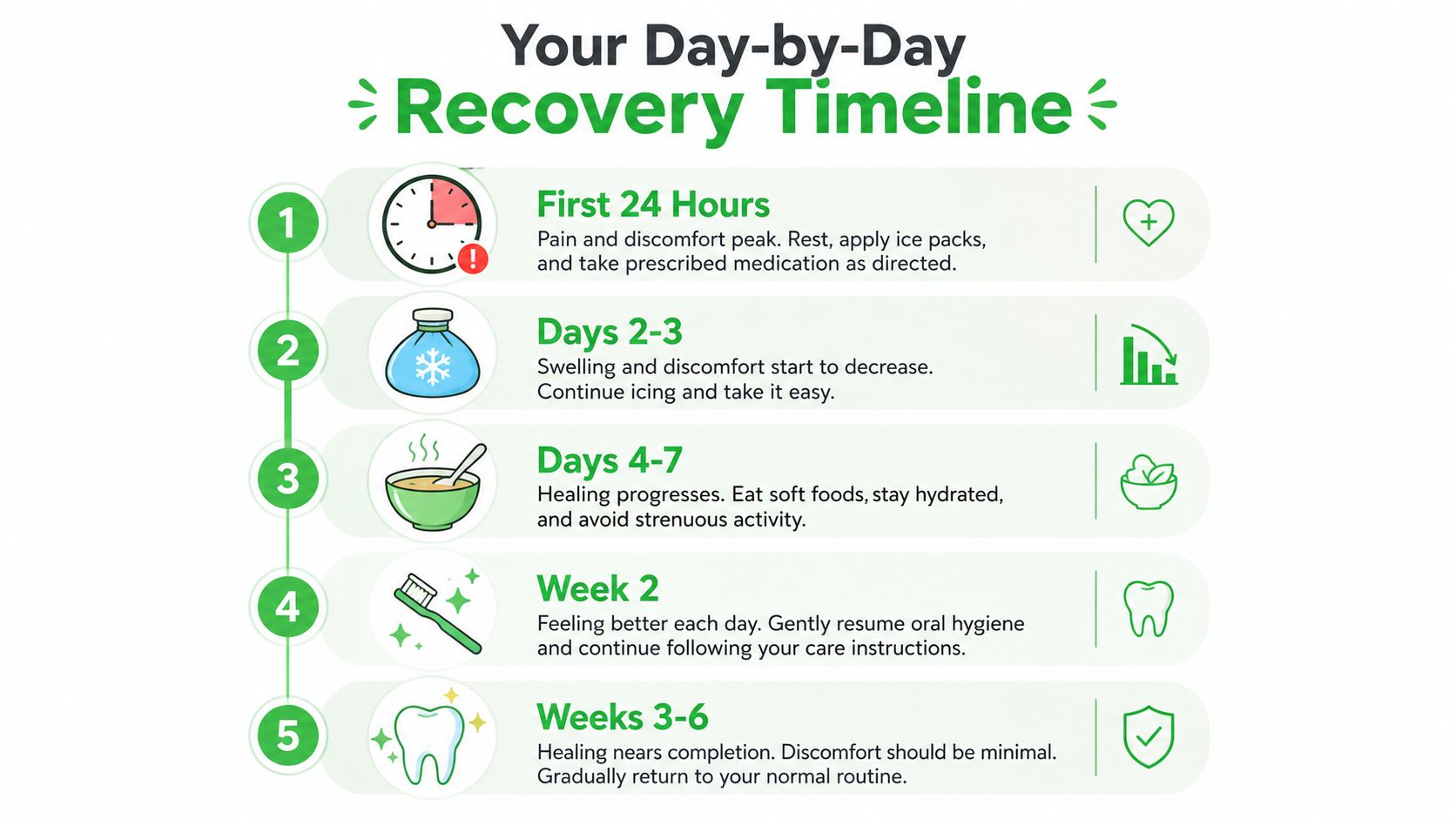
Root canal recovery is usually front-loaded, meaning the most noticeable discomfort occurs early and then declines. A review reports postoperative pain in about 40% of patients during the first 24 hours, falling to about 11% by day 7, while most pain episodes last 24–48 hours. Some patients still experience pain for 3–9 days, so the direction of change matters as much as the number of days (postoperative endodontic pain review).
The first 24 hours
Pain commonly reaches its highest point during this period. You may feel tenderness when biting, mild jaw fatigue from keeping your mouth open, or a low-grade throbbing sensation as the anesthetic disappears. Take the medication recommended by your dentist before discomfort becomes difficult to control, avoid chewing on the treated side, and use a cold compress if the outside of your face feels tender.
Days 2 and 3
By the second or third day, soreness should be stable or improving. A tooth that's slightly tender under pressure can still be within the expected pattern, especially if it was painful or inflamed before treatment. What concerns me clinically is a clear reversal, such as pain that was easing and then becomes stronger, swelling that expands, or a bite that feels increasingly uncomfortable.
Days 4 through 7
Many patients are close to their normal routine by this point. You may still notice the tooth when chewing, but discomfort should be manageable and should continue to fade. If you're approaching the end of the first week with significant pain rather than mild residual tenderness, call the dental office for advice rather than continuing to wait.
The following weeks
Biting sensitivity may outlast the general ache. That can happen because the ligament supporting the tooth remains irritated even after the pulp has been removed. Avoid hard or sticky foods on that side until your dentist has completed the permanent restoration. Guidance on how long a root canal filling takes can also help you understand why the temporary and final stages may be separate appointments.
Managing Pain and Discomfort Effectively
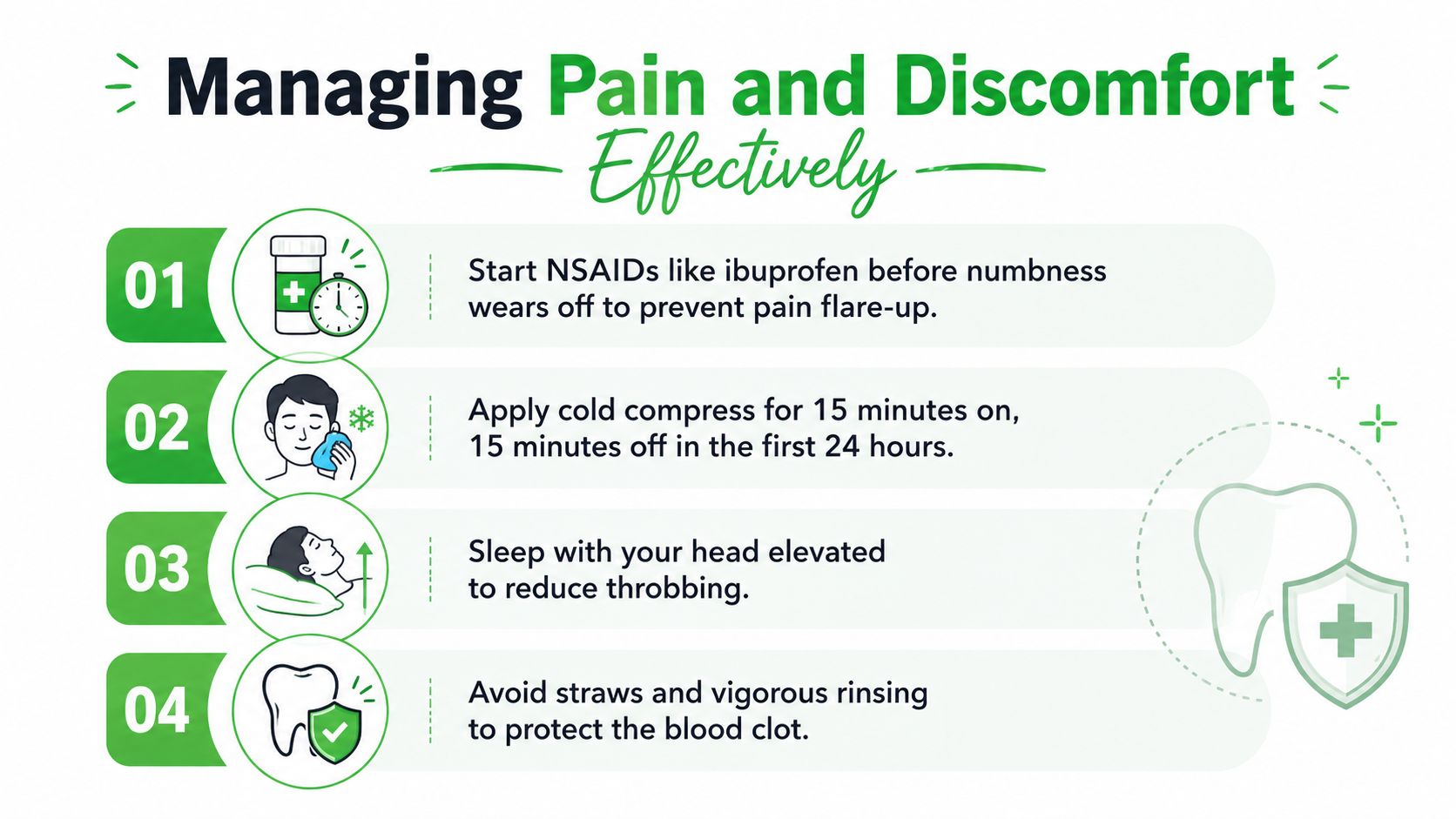
A good pain plan starts before the numbness has completely disappeared. Follow the medication instructions from your dentist, and use an over-the-counter anti-inflammatory such as ibuprofen only if it's safe for you. People with a history of stomach ulcers, kidney disease, certain heart conditions, blood-thinning medication use, pregnancy, or an NSAID allergy may need a different approach.
Acetaminophen, often known by the brand name Tylenol, may be appropriate for some patients. Don't exceed the label directions, combine products that contain the same ingredient, or create a dosing schedule without checking with a dentist, doctor, or pharmacist. If you're comparing options, this guide to a safe Tylenol and ibuprofen schedule can provide general medication-planning context, but it doesn't replace individualized medical advice.
Simple measures that reduce irritation
- Use cold from the outside: Apply a cold compress to the cheek for short intervals during the first day. Keep a cloth between the pack and your skin.
- Rest your head: Sleeping with an extra pillow can make throbbing less noticeable for some patients.
- Reduce mechanical stress: Chew on the opposite side and avoid clenching or repeatedly checking the tooth.
- Follow the prescription exactly: If your dentist prescribed medication, use it as directed rather than adding unapproved products.
Prescription pain medicine is occasionally considered when discomfort is difficult to control, but severe or escalating pain deserves an assessment, not stronger medication. The dentist may need to check the bite, the temporary filling, the surrounding tissues, or the original infection.
Antibiotics aren't routine after uncomplicated root canal treatment. The American Association of Endodontists describes antibiotics as adjunctive treatment for specific situations, such as systemic involvement or spreading infection, rather than as a standard response to ordinary postoperative soreness (AAE guidance on systemic antibiotics). Fever, diffuse swelling, cellulitis, or particular immune concerns can change that decision. The key distinction is that normal soreness is often inflammatory, while spreading infection produces broader warning signs that require professional evaluation.
Eating and Oral Hygiene During Healing
Food choices protect the temporary filling and reduce pressure on a sensitive tooth. During the first few days, select foods that are soft, cool or comfortably warm, and easy to chew away from the treated area. A smoothie, yogurt, oatmeal, scrambled eggs, mashed potatoes, soft pasta, or a tender soup can work well.
Avoid hard, crunchy, sticky, or very hot foods while the tooth is vulnerable. Ice, nuts, popcorn kernels, hard crusts, chewy sweets, and sticky candies can place damaging force on a temporary restoration. Very hot foods can also be uncomfortable while the tissues remain sensitive.
Keep the area clean without overhandling it
Brush twice daily with a soft-bristle toothbrush, including the treated tooth, unless your dentist gave you different instructions. Use gentle strokes around the temporary filling rather than scrubbing it. Floss the neighboring teeth carefully, sliding the floss out through the side instead of snapping it upward if the temporary material catches.
A mild warm salt-water rinse may feel soothing, but vigorous swishing isn't helpful. Let the liquid move gently around your mouth and allow it to fall out rather than forcefully spitting. You should also avoid using the tooth as a test surface for hard foods because it feels better.
For home care after dental treatment, some families keep single-use patient care supplies available to support clean, convenient routines. Those supplies don't replace brushing, flossing, or professional follow-up, but they can be useful when you're managing tenderness and want to avoid unnecessary handling of the area.
Normal eating can gradually return as chewing becomes comfortable, but the temporary filling doesn't provide the same protection as the final restoration. Continue avoiding hard or sticky foods on that tooth until your dentist confirms that the permanent filling or crown is in place.
Recognizing Normal Healing Versus Complications
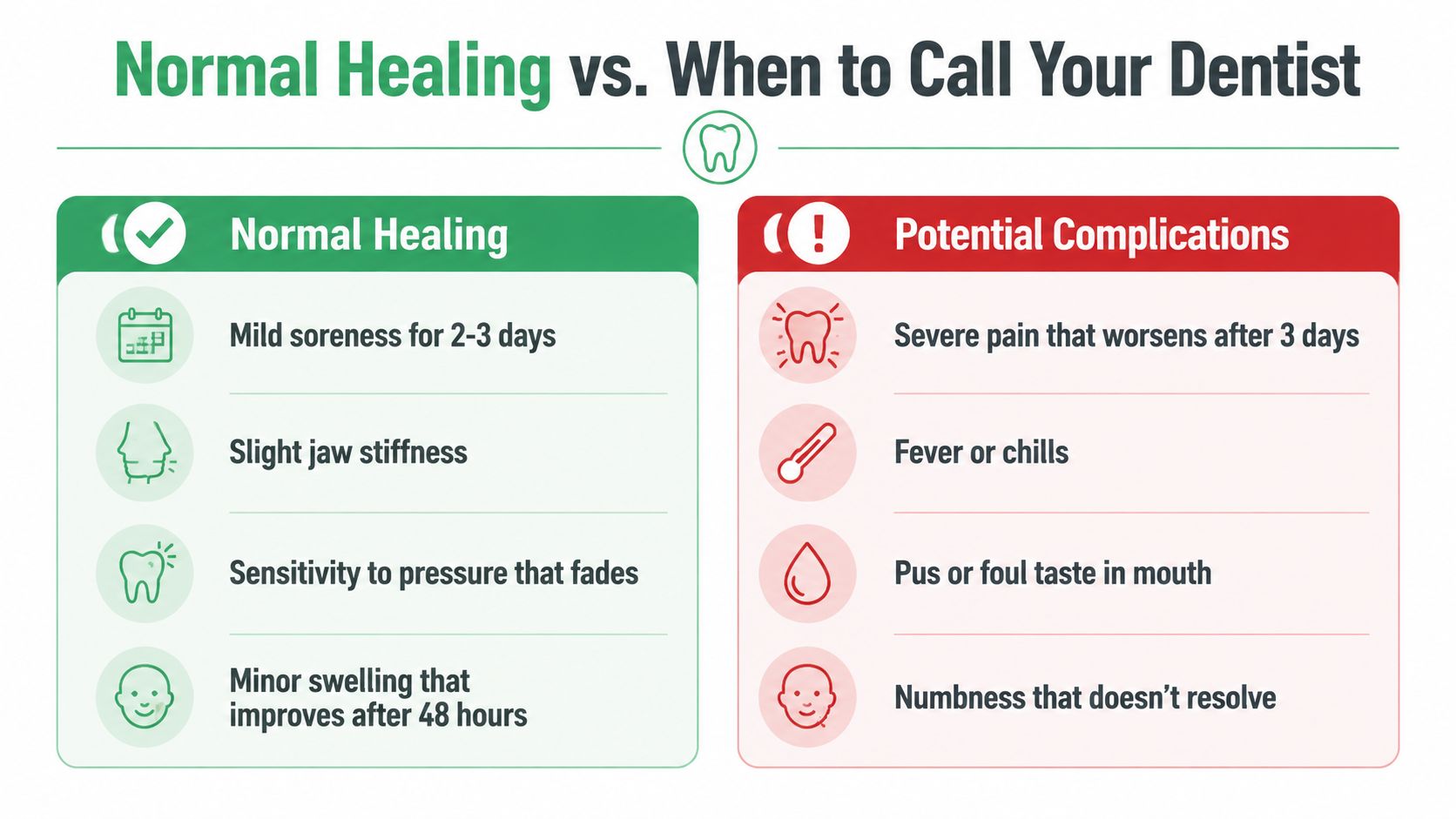
The most reliable sign of normal healing is steady improvement. Mild soreness, slight jaw stiffness, and tenderness when biting can occur after treatment, but each day should generally feel easier than the last. A small area of irritation isn't the same as worsening swelling or pain that prevents ordinary activities.
A systematic review estimated persistent pain at about 5% overall, or roughly 1 in 25 patients, while severe pain during the first week affected roughly 1 in 7 patients (systematic review of pain after root canal therapy). These figures show that significant discomfort can occur, but persistent pain is not the usual outcome.
Usually compatible with healing
- Mild tenderness: The tooth may feel bruised or sensitive when you bite, particularly early on.
- Jaw stiffness: Soreness from keeping your mouth open should gradually resolve.
- A different bite sensation: A temporary filling can make the tooth feel unfamiliar.
- Improving sensitivity: The important pattern is reduction, not escalation.
Call the dental office promptly
- Pain that worsens after the early period: A sharp increase after improvement may indicate a bite, restoration, or infection-related issue.
- Increasing swelling: Swelling that spreads or becomes more pronounced needs assessment.
- Fever, chills, or feeling unwell: These symptoms can signal systemic involvement.
- Pus, a foul taste, or drainage: These findings aren't typical of routine soreness.
- A lost temporary filling: Contact the office so the tooth can be protected.
- Numbness that doesn't resolve: Persistent numbness should be reported rather than watched indefinitely.
Seek urgent care for breathing or swallowing difficulty, rapidly spreading facial swelling, or signs of a serious allergic reaction. Persistent pain beyond a week is unusual according to Cleveland Clinic guidance, especially when it isn't steadily improving. Calling early doesn't mean something serious has happened. It gives the dentist a chance to correct a manageable problem before it becomes more disruptive.
Long-Term Healing and Your Final Restoration
Feeling comfortable after several days doesn't mean every biological process is complete. Bone healing around a root-end lesion can continue for many months. A PubMed-indexed study found an average healing time of 11.78 months, while a newer study reported a mean healing time of 19 months and complete healing in 76% of analyzed cases (PubMed-indexed endodontic healing research).
That long biological timeline is different from the short period of postoperative soreness. You can feel normal while the supporting tissues continue repairing themselves, so follow-up examinations remain important.
The permanent restoration is also a key part of protecting the tooth. A temporary filling is designed for interim protection, not indefinite chewing, and a root canal treated tooth can remain vulnerable to fracture until it receives the restoration your dentist recommends. If your treatment plan includes a crown, this complete guide to tooth caps and crowns explains the purpose of that final step.
If you're recovering from a root canal and aren't sure whether your pain, bite, or temporary filling is progressing normally, All Stars Dental provides root canal therapy, restorative care, and crown treatment with clear explanations before work begins. Visit All Stars Dental to request an appointment in central Houston and get your recovery questions assessed by a dental team.