
Chipped Dental Crown: Immediate Steps and Repair Options
You bite into something harder than you expected, hear a small crack, and then feel the edge of a chipped dental crown with your tongue. An initial thought might be panic, followed by a very practical question, do I need to get this fixed today, or can it wait?
The right answer depends less on the chip itself and more on what it's doing. A tiny cosmetic nick with no pain is a very different problem from a loose crown, sharp edge, bleeding, or heat and cold sensitivity. The goal is to sort those situations quickly so you don't overreact to minor damage or underreact to a real structural problem.
Table of Contents
- Assessing the Urgency of Your Chipped Crown
- Understanding What Caused the Chip
- Repair Versus Replacement Decision Factors
- Protecting Your Tooth While Waiting for Care
- What to Expect at Your Dental Appointment
- Long-Term Crown Longevity and Prevention
Assessing the Urgency of Your Chipped Crown
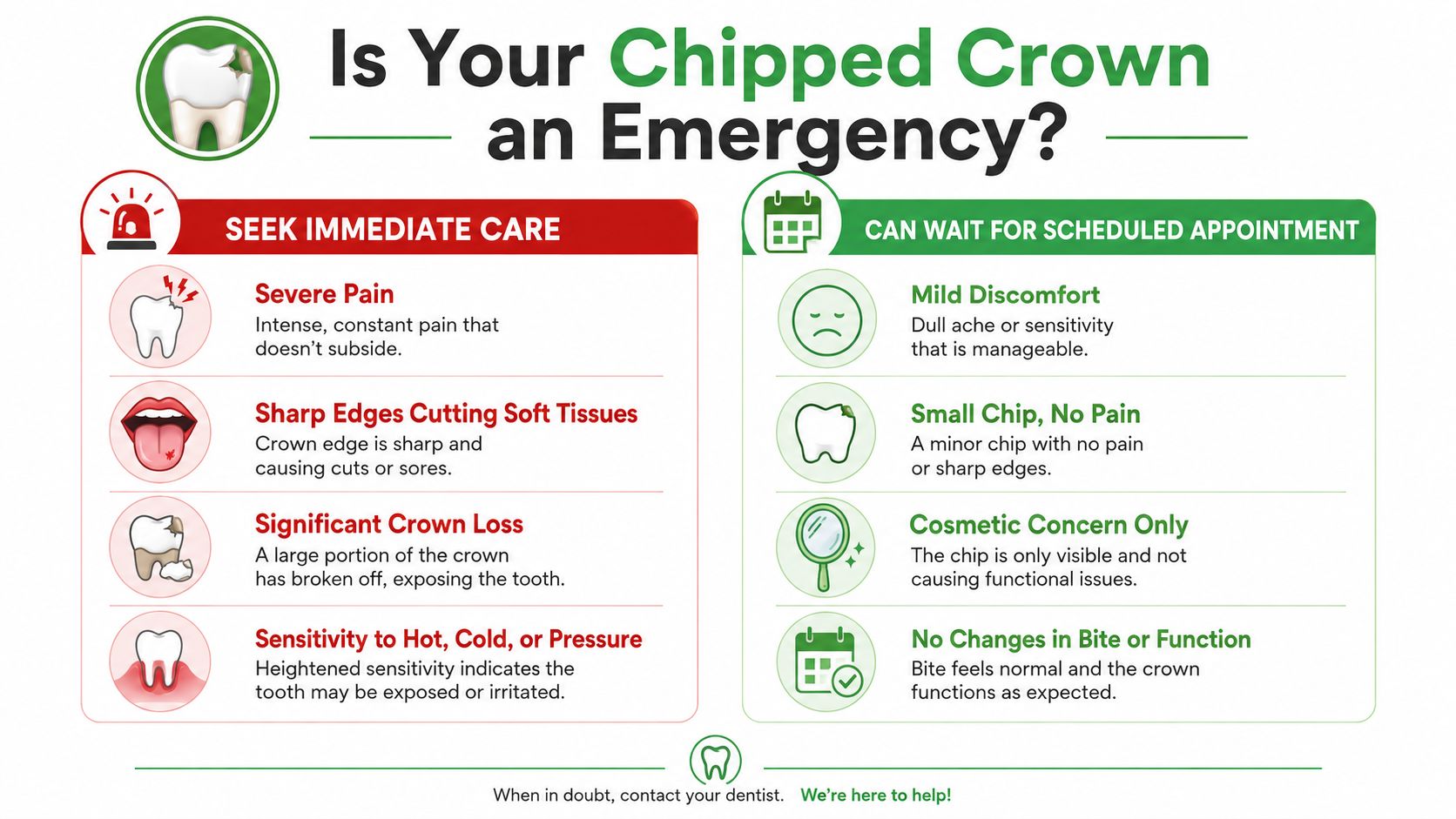
The first thing to do is stop chewing on that side and check how the crown feels with your tongue, not your fingers. A chipped dental crown can be a cosmetic surface defect, or it can be the first sign that the restoration is losing support. The difference shows up in symptoms more than in appearance.
Red flags that need prompt attention
If the chip is sharp enough to cut your tongue or cheek, if the crown feels loose, or if you have bleeding or notable temperature sensitivity, don't put it off. Those signs suggest the crown may no longer be sealing or protecting the tooth the way it should. A loose or broken crown also leaves the underlying tooth more exposed to further damage and decay, which is why urgent evaluation matters even when the pain isn't dramatic.
Practical rule: pain isn't the only reason to be seen quickly. A crown that's moving, sharp, or exposing tooth structure deserves attention fast.
When it can usually wait a short time
A small chip with no pain, no sharp edge, and no looseness can often wait a day or two while you arrange a normal appointment. That's especially true if the damage is only visible in the mirror and isn't changing how you bite. For a simple triage check, compare the crown to the guidance in bad fitting crown symptoms, then decide whether the issue feels cosmetic or structural.
A quick self-check
Ask yourself three things. Is the crown painful? Is it sharp or loose? Can you see or feel tooth structure underneath? If the answer is yes to any of those, it's safer to call promptly rather than wait for the next convenient opening.
Understanding What Caused the Chip
A chip rarely happens in a vacuum. It often points to a combination of bite force, material stress, or an issue with the tooth under the crown. Ceramic and veneered restorations are especially vulnerable to chipping, and the clinical literature shows that this complication is well recognized in crown and bridge work, even when the crown itself still has plenty of life left in it clinical review and pooled analyses.
The usual mechanical reasons
Clenching and grinding put repeated load on the crown, especially at night when patients don't notice the stress. A high bite, an uneven contact point, or chewing something unexpectedly hard can also trigger a localized fracture. In those cases, the chip is often a symptom of overload, not a one-time fluke.
The biological reasons dentists look for
A crown can chip because the tooth underneath is changing. Decay at the margin, cement breakdown, or a weakened core can leave less support for the restoration. That's why a dentist doesn't just look at the missing piece, they check the crown edges, the bite, and the tooth beneath it to see whether the damage is isolated or part of a larger failure pattern.
A chip on the outside can be a warning sign on the inside. If the support underneath is failing, a simple polish won't solve the real problem.
If you want a broader look at the mechanics behind fractures and prevention, what causes a tooth cap to crack and how to prevent it is a useful companion topic. The key point is simple, the same visible chip can come from very different causes, and the cause drives the treatment plan.
Repair Versus Replacement Decision Factors
A conservative repair is attractive because it preserves what's already in place. But the more important question is whether the repair will hold under normal chewing. For a small, localized chip with stable margins and enough healthy crown left to bond to, intraoral repair can be reasonable. For a larger fracture, recurrent breakage, or a crown that's loose or unstable, replacement usually makes more sense.
When repair is the better fit
The literature on veneered crowns supports repair when the damage is limited and the restoration is otherwise sound, with composite repair success reported at about 70% to 85% over 5 years for chipped porcelain crowns repair protocols and outcomes. In the same broad repair literature, adhesive reattachments performed best when the fracture pattern was uncomplicated, which fits the everyday dental rule of thumb, small chip, stable crown, good isolation, repair may work.
When replacement is the safer call
Replacement becomes the stronger option when the chip is part of a deeper fracture, the margins no longer fit well, or the crown keeps breaking in the same area. If the underlying tooth also needs treatment, repair alone can become a short-term patch that fails again. For cracked teeth that needed endodontic treatment, outcomes were much better when the tooth received full crown coverage, with survival reported at 97% in one retrospective cohort, compared with lower survival when treated more conservatively cracked-teeth management review.
| Factor | Repair Candidate | Replacement Needed |
|---|---|---|
| Damage size | Small, localized chip | Large fracture or deep crack |
| Crown stability | Solid and well-fitting | Loose, unstable, or repeatedly failing |
| Bite forces | Not taking heavy load | High stress area or repeated overload |
| Tooth support | Healthy remaining structure | Support is compromised or decayed |
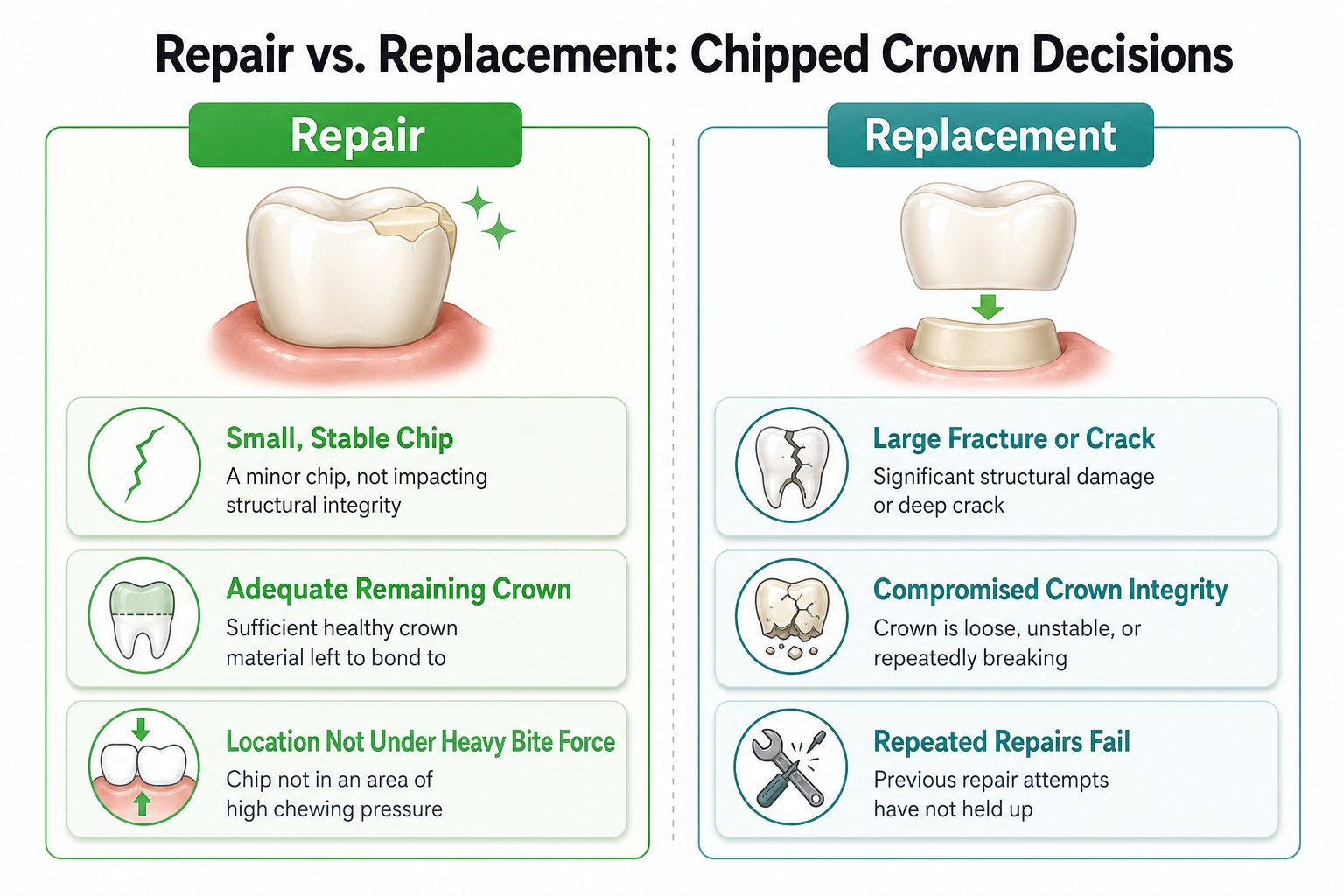
Bottom line: repair is for contained damage, replacement is for structural failure. The right choice depends on what the crown is doing under load, not just how it looks.
Protecting Your Tooth While Waiting for Care
The main goal before your visit is to keep a small chip from turning into a bigger problem. Keep the area clean, avoid chewing on that side, and cover any sharp edge so it does not cut your tongue or cheek. If a fragment comes off, place it in a clean container and bring it to the appointment.
A minor chip with no pain is usually a monitoring problem, not an emergency. A loose crown, pain when biting, swelling, or a rough edge that keeps catching on the tongue needs quicker attention because those signs suggest the tooth or cement may be failing underneath.
Safe temporary measures at home
Dental wax can blunt a sharp edge enough to protect the soft tissues in your mouth. Some patients use sugar-free gum briefly, but wax is cleaner and holds up better as a short-term cover. Soft foods are the safer choice until the crown is checked, and brushing should stay gentle around the damaged area so you do not pry at the chip.
What not to do
Do not glue the crown back yourself, and do not use household adhesives. A home repair can make later bonding harder and can irritate the gums or the tooth surface. If the crown feels loose, temporary dental cement may help in some cases, but that decision should come after a dentist checks the fit and the tooth underneath.
For patients who want a practice that can evaluate the restoration and arrange follow-up without delay, All Stars Dental provides crowns, emergency care, and other restorative options under one roof. The office's appointment scheduling for doctors is a practical reminder that fast access matters when a restoration is damaged, because the longer a crown stays compromised, the more likely the underlying tooth is to get irritated or fractured.

What to Expect at Your Dental Appointment
A chipped crown visit usually begins with a close look at the crown, the bite, and the tooth margins. The dentist may also take X-rays if there is any concern about decay, a crack, or loss of support underneath. The main question is not only whether the crown is chipped, but whether the tooth underneath is still healthy enough to keep supporting it.
If the chip is small and the crown is otherwise stable, the dentist may smooth the edge or repair it in the mouth. If the fracture is deeper, the crown is loose, or the margins are open, the discussion usually shifts toward remaking the crown. When the tooth has additional structural problems, the plan can also include root canal treatment, buildup, or another restorative step before a new crown is made.
The visit is also the time to sort out timing. A cosmetic chip without pain or loosening can often wait for a scheduled repair, while sensitivity, pain on biting, swelling, or a crown that moves with pressure points to a more urgent problem. That symptom-based judgment matters more than the chip alone.
Ask whether the chip looks isolated or whether there are signs of bite trauma, cement loss, or decay. Ask how well the repair or replacement is expected to hold up under your bite, especially if you clench or grind. Ask what material makes sense for that tooth, because front and back teeth face different stresses. If your practice needs to coordinate follow-up quickly, best appointment scheduling for doctors is a practical example of how organized access supports timely care. A chipped crown appointment is often brief, but the decisions made there determine whether the problem is settled or whether the tooth needs more work later.
Long-Term Crown Longevity and Prevention
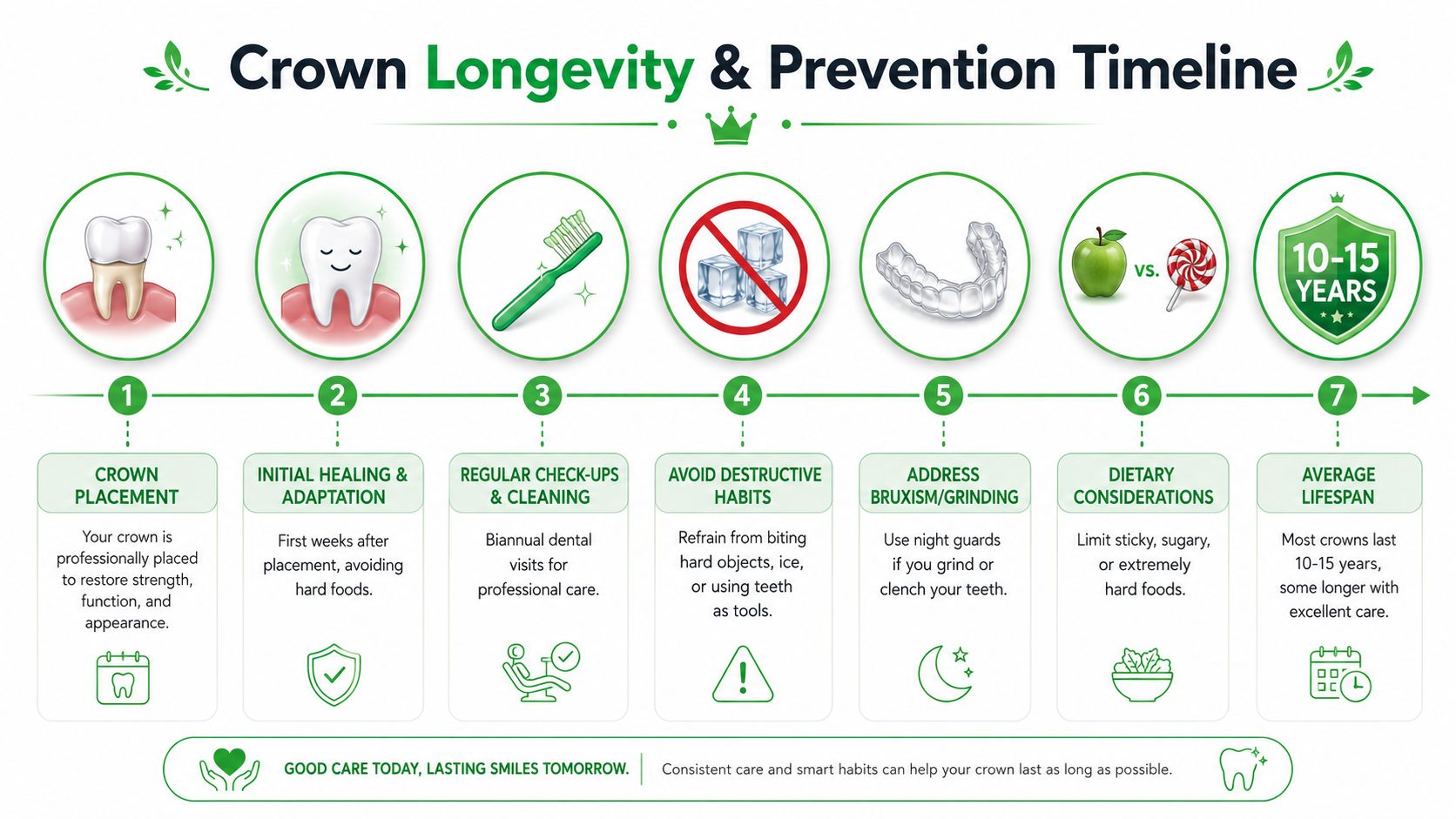
Crowns are durable, but they're not forever. Long-term research shows that survival declines over time, with one retrospective study reporting cumulative survival rates of 89.9% at 5 years, 80.9% at 10 years, 70.5% at 15 years, and 61.8% at 20 years long-term crown survival data. That doesn't mean a crown is failing at each milestone, it means wear, bite stress, and small technical issues become more likely as years pass.
Prevention is mostly about reducing stress
The best prevention strategy is usually not one dramatic fix, it's several small ones. Protect the crown from biting hard objects, get the bite checked if you feel recurring pressure in one spot, and wear a night guard if you clench or grind. Regular exams also matter because tiny margin changes or early wear patterns are easier to manage before they become chips.
What to expect over time
Many crowns last for years without trouble, and even when chipping occurs, the restoration can often remain serviceable. In the crown literature, technical complications don't always equal failure, which is why a chip should be treated as a warning, not a verdict. If you want a practical overview of lifespan expectations, how long dental crowns last gives the broader context.
If your crown has chipped, cracked, or started to feel loose, don't guess at the severity. Book an exam with All Stars Dental so the crown, the bite, and the tooth underneath can be evaluated together, then get a clear plan for repair, replacement, or protection before the damage spreads.